

DISCERNING TRUTH FROM DECEPTION: MATURITY, ACCOUNTABILITY, AND SPIRITUAL STABILITY IN A TROUBLED AGE By: Major Frank Materu
Key Scripture:
“Beloved, believe not every spirit, but try the spirits whether they are of God.” — 1 John 4:1
________________________________________
INTRODUCTION
In every generation, spiritual communities face one of the most delicate and dangerous challenges: the battle between truth and distorted narratives shaped by pain, pride, misunderstanding, and unresolved inner conflict. Where truth is not carefully handled, it becomes easy for people to reinterpret their experiences in ways that produce division, accusation, and long-term spiritual instability.
Human beings are emotional, interpretive, and often influenced by personal history. This means that two people can experience the same environment and walk away with completely different conclusions. Without spiritual maturity, these interpretations can harden into fixed narratives that may not reflect reality accurately but still feel true to the person holding them.
This lesson is not designed to condemn individuals, but to expose patterns of thinking and behavior that weaken spiritual growth, damage relationships, and distort truth. It calls believers to a higher level of discernment, responsibility, humility, and emotional maturity. It also warns against the dangers of accusation-driven thinking, unchecked criticism, and the temptation to interpret personal outcomes as evidence against others rather than as part of personal growth and accountability.
The goal is clarity, not conflict. Strength, not suspicion. Truth, not distortion.

________________________________________
THE SPIRIT OF DISCERNMENT IN A COMPLEX WORLD
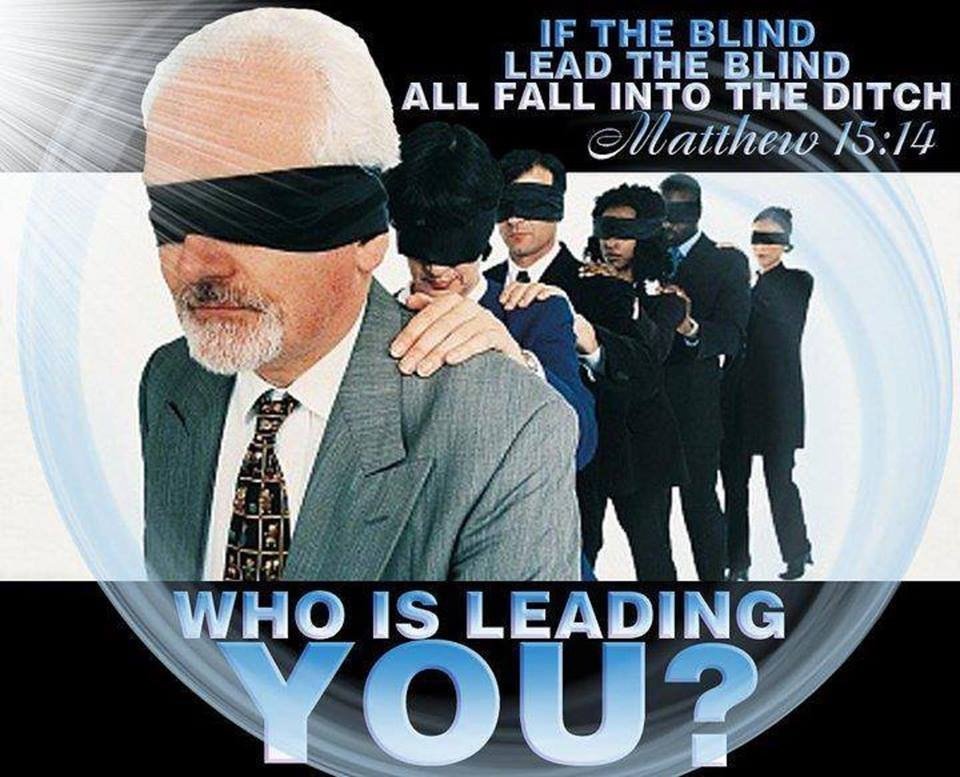
Discernment is not suspicion; it is spiritual clarity grounded in truth. In an age where information is abundant and narratives are competing, believers must develop the ability to distinguish between truth, partial truth, and distortion.
Not every strong opinion is truth. Not every emotional testimony is accurate. Not every accusation is rooted in righteousness. Discernment requires the believer to slow down, test information, and evaluate motives, fruit, and consistency.
Without discernment, people become easily influenced by persuasive voices, emotional storytelling, or biased interpretations of past experiences. This creates instability in belief systems and relationships.
Spiritual maturity demands that believers do not accept every narrative at face value but instead evaluate it through the lens of Scripture, wisdom, and consistent fruit.
“Prove all things; hold fast that which is good.” — 1 Thessalonians 5:21
________________________________________
THE DANGERS OF ACCUSATION-BASED THINKING
One of the most destructive patterns in spiritual communities is the tendency to build identity and interpretation around accusation. When individuals consistently interpret their life experiences through blame, they begin to lose objectivity and spiritual balance.
Accusation-based thinking often begins as unresolved pain but can develop into a fixed mindset where personal responsibility is minimized and external blame is emphasized. Over time, this weakens emotional healing and prevents growth.
Such thinking can also distort memory, where past events are reinterpreted in ways that reinforce present bitterness rather than truth. This leads to ongoing internal conflict and relational breakdown.
The danger is not only in what is said about others, but in what this mindset does to the person holding it. It traps them in cycles of suspicion, anger, and spiritual stagnation.
Spiritual maturity requires the courage to examine one’s own role in experiences rather than consistently externalizing responsibility.
“Why beholdest thou the mote that is in thy brother’s eye, but considerest not the beam that is in thine own eye?” — Matthew 7:3
________________________________________
THE RESPONSIBILITY OF LEADERSHIP AND THE NEED FOR ACCOUNTABILITY
Leadership in spiritual contexts carries weight, influence, and responsibility. Those who are entrusted with guiding others must do so with integrity, humility, and accountability. Where leadership fails in character or wisdom, damage can occur, and such failures should never be ignored or excused.
However, accountability must always be pursued with truth, fairness, and spiritual maturity. Not every disagreement or disappointment should be elevated into accusation. Not every correction should be interpreted as oppression. Not every challenge should be framed as abuse.
Healthy accountability builds restoration and clarity. Destructive accusation builds division and confusion. The difference lies in intention, truthfulness, and the willingness to seek resolution rather than public condemnation.
The mature believer understands that leaders are also human and must be evaluated with both grace and truth. Likewise, leaders must remain open to correction and examination without becoming defensive or authoritarian.
“Rebuke not an elder, but intreat him as a father.” — 1 Timothy 5:1

________________________________________
THE POWER OF WORDS AND THE WEIGHT OF SPEECH
Words are not neutral. They carry spiritual, emotional, and relational consequences. Repeated negative speech can shape perception, reinforce bitterness, and solidify division.
When speech becomes consistently critical, accusatory, or exaggerated, it begins to reshape both the speaker and the listener. Over time, what is spoken repeatedly can begin to feel like reality, even when it is not fully accurate.
This is why Scripture places strong emphasis on the control of the tongue. Speech is a reflection of internal condition. A disciplined tongue reflects a disciplined heart.
Spiritual maturity is demonstrated not only in what a person believes but in how they speak about others, especially in moments of disagreement or disappointment.
“Death and life are in the power of the tongue.” — Proverbs 18:21
________________________________________
BITTERNESS, MEMORY, AND THE DISTORTION OF PAST EXPERIENCES
Unresolved bitterness has the power to reshape memory. When emotional wounds are not processed correctly, they often become filters through which all past experiences are reinterpreted.
This can lead to selective memory, where only negative aspects are emphasized while positive or balanced elements are minimized or forgotten. Over time, this creates a distorted narrative that feels entirely true to the person experiencing it.
Bitterness also affects future relationships, as trust becomes difficult and suspicion becomes default. This prevents healing and blocks the ability to move forward in freedom.
Spiritual maturity requires forgiveness, not as denial of experience, but as release from its control. Forgiveness restores clarity and allows truth to be separated from emotional distortion.
“Let all bitterness, and wrath, and anger, and clamour, and evil speaking, be put away from you.” — Ephesians 4:31
________________________________________
THE CALL TO PERSONAL RESPONSIBILITY AND GROWTH
One of the most important aspects of spiritual maturity is personal responsibility. Life becomes stable when individuals are willing to examine their own choices, actions, and responses honestly.
Blame may provide temporary emotional relief, but it does not produce transformation. Growth begins when a person acknowledges their role in outcomes and commits to learning from them.
Personal responsibility does not deny that others may have contributed to pain or difficulty. Instead, it focuses on what one can control: responses, decisions, and future direction.
Without personal responsibility, individuals remain trapped in cycles of repetition, reliving the same emotional struggles without resolution.
True growth is seen when a person stops asking only “who is responsible?” and begins asking “what must I change?”
“Examine yourselves, whether ye be in the faith.” — 2 Corinthians 13:5
________________________________________
THE IMPORTANCE OF TRUTH, HUMILITY, AND BALANCED PERCEPTION
Truth is not sustained by emotion but by consistency, humility, and openness to correction. A balanced life requires the willingness to accept that personal perception may not always represent full reality.
Humility allows correction to enter without resistance. Pride resists correction and reinforces personal narrative even when it is incomplete or inaccurate.
Balanced perception means recognizing that most human experiences are complex, involving multiple perspectives, motives, and interpretations. Reducing everything to simple blame narratives weakens understanding.
Spiritual maturity embraces complexity without losing clarity. It refuses to oversimplify people, situations, or experiences in ways that distort truth.
“God resisteth the proud, but giveth grace unto the humble.” — James 4:6
________________________________________
SUMMARY
This lesson has emphasized the importance of discernment, responsibility, and maturity in handling truth, relationships, and personal experiences. It has shown that accusation-based thinking, bitterness, and distorted narratives can damage spiritual growth and relational stability.
True maturity is seen in balanced perception, controlled speech, personal accountability, and willingness to pursue truth rather than emotional interpretation. Leaders and followers alike are called to integrity, humility, and openness to correction.

________________________________________
CONCLUSION
Spiritual strength is not measured by intensity of opinion but by stability of character. A mature believer does not live by accusation or bitterness but by truth, responsibility, and discernment.
Where confusion exists, truth must be pursued. Where pain exists, healing must be sought. Where misunderstanding exists, humility must open the door for correction.
The goal is not to win arguments but to build a life anchored in truth.
________________________________________
THE CALL TO ACTION
There must be a conscious decision to reject distorted thinking patterns and embrace truth-centered living. Speech must be disciplined. Thoughts must be examined. Interpretations must be tested.
Personal responsibility must replace blame. Discernment must replace assumption. Humility must replace pride.
This is the path toward stability, healing, and spiritual maturity.
________________________________________
FINAL WORD OF ENCOURAGEMENT
Growth is possible. Healing is possible. Clarity is possible. No one is permanently trapped in distorted thinking or emotional cycles.
When truth is embraced with humility, transformation becomes inevitable. The journey may require correction, but the outcome is freedom and stability.
________________________________________
SALVATION PRAYER
Lord Jesus Christ,
I come before You acknowledging my need for truth, healing, and transformation. Forgive me for every wrong attitude, every careless word, and every moment I have judged others unfairly.
Cleanse my heart from bitterness, pride, and misunderstanding. Teach me humility and give me discernment to walk in truth. Help me to take responsibility for my life and grow in wisdom and maturity.
I accept You as my Lord and Savior. Lead me in Your truth and establish my life in righteousness.
In Jesus’ name, Amen.

















Leave a Comment