

FAITHFULNESS TO GOD AND COVENANT: A PROPHETIC LESSON FROM MALACHI 2 By: Major Frank Materu
Key Scripture:
“For the priest’s lips should keep knowledge, and they should seek the law at his mouth: for he is the messenger of the Lord of hosts.” — Malachi 2:7
________________________________________
Introduction
The second chapter of the Book of Malachi presents a profound and sobering message concerning covenant responsibility, spiritual leadership, and faithfulness before God. It is a chapter that addresses both leaders and ordinary people, revealing how deeply God values integrity in worship, relationships, and spiritual service. The message is not merely historical; it is timeless and speaks directly to modern believers, spiritual leaders, families, and communities.
Malachi ministered during a time when the people of God had returned from exile and rebuilt the temple, yet their spiritual lives were far from restored. Outwardly, worship continued, sacrifices were offered, and religious structures were in place. However, inwardly, there was corruption, compromise, and spiritual indifference. The priests had become careless in their duties, the people had become unfaithful in their relationships, and the nation had begun to drift away from the covenant of God.
Malachi 2 reveals that spiritual decline often begins with leadership failure and is sustained by personal compromise. When leaders fail to honor God, people lose direction. When covenants are broken, societies weaken. When truth is compromised, righteousness declines. This chapter shows that God does not merely observe religious activity; He examines the heart, the motives, and the faithfulness of His people.
The chapter focuses on three major themes: the corruption of spiritual leadership, the breaking of covenant relationships, and the consequences of unfaithfulness. These themes reveal God's deep concern for truth, holiness, and covenant faithfulness. They also demonstrate that spiritual health cannot exist where truth is distorted, covenants are broken, and worship becomes empty ritual.
Malachi 2 is therefore both a warning and an invitation. It warns against spiritual negligence and covenant unfaithfulness, while inviting God’s people to return to sincerity, integrity, and devotion.
________________________________________
Corruption of Spiritual Leadership
________________________________________
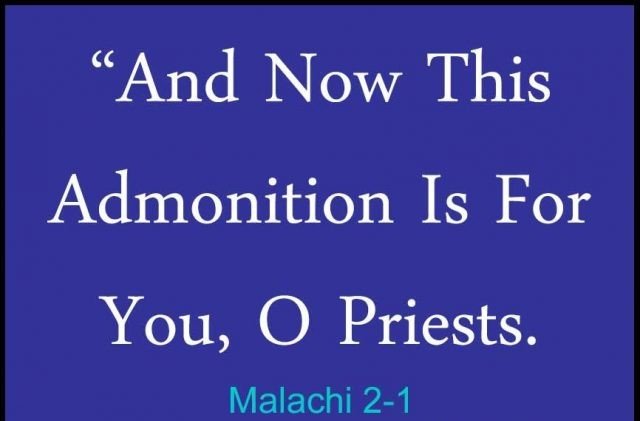
“And now, O ye priests, this commandment is for you.” — Malachi 2:1
Malachi begins by addressing the priests directly. These were the spiritual leaders entrusted with teaching the law and guiding the people in righteousness. They were meant to be examples of holiness and guardians of truth. Instead, they had become careless and dishonorable in their service.
God declares that if the priests do not listen and set their hearts to honor His name, He will send a curse upon them and curse their blessings. This statement reveals a profound spiritual principle: blessings without obedience can turn into curses. When spiritual leaders misuse their position, their influence becomes destructive rather than life-giving.
The priests had lost their reverence for God. Their service had become routine instead of sacred. They no longer viewed their calling as a divine responsibility but as a professional duty. As a result, their ministry lost its power and credibility.
God emphasizes that spiritual leadership is not merely about performing rituals but about honoring His name. When leaders lose their reverence for God, they inevitably lead people astray. Leadership without holiness becomes dangerous because it gives the appearance of truth while lacking its substance.
The warning to the priests shows that God holds leaders accountable at a higher level. The greater the responsibility, the greater the accountability. Spiritual authority is not given for personal benefit but for the service and guidance of others.
________________________________________
The Covenant of Levi
________________________________________
“My covenant was with him of life and peace; and I gave them to him for the fear wherewith he feared me.” — Malachi 2:5
God reminds the priests of His covenant with Levi, which was a covenant of life and peace. This covenant was based on reverence, truth, and righteousness. The original priests walked in harmony with God and led many away from sin.
The covenant of Levi represents God’s ideal for spiritual leadership. It was characterized by reverence for God, faithfulness to truth, and a commitment to righteousness. The priests were meant to embody these qualities so that the people could see the character of God reflected in their lives.
The passage describes the faithful priest as one in whose mouth was true instruction and in whose lips no corruption was found. He walked with God in peace and uprightness and turned many away from sin. This description presents a model for all spiritual leaders.
Spiritual leadership is not merely about knowledge but about character. It is not merely about teaching but about living the truth. When leaders walk in integrity, their lives become living sermons that inspire others to follow God.
The covenant of Levi also shows that true ministry brings life and peace. When leaders walk with God, their influence promotes spiritual growth and harmony. But when leaders depart from God, their influence brings confusion and decline.
________________________________________
The Failure of the Priests
________________________________________
“But ye are departed out of the way; ye have caused many to stumble at the law.” — Malachi 2:8
Instead of upholding the covenant, the priests had departed from the way of righteousness. They had caused many to stumble by their teaching and example. Their failure was not only personal but communal, affecting the entire nation.
One of the most serious accusations against the priests was that they had corrupted the covenant. This means they had distorted the purpose and meaning of their calling. They no longer represented God accurately to the people.
Spiritual leaders have the power to guide people toward truth or lead them into error. When leaders compromise truth, they multiply confusion. When leaders distort God’s word, they weaken faith and encourage sin.
Because of their failure, God declared that He would make them despised and humiliated before all the people. This judgment reflects the principle that dishonor follows unfaithfulness. When leaders lose their integrity, they lose their respect.
The failure of the priests teaches that spiritual authority cannot be sustained without spiritual integrity. Respect is not maintained by position but by character. Leadership without righteousness eventually collapses.

________________________________________
Breaking the Covenant of Brotherhood
________________________________________
“Have we not all one father? Hath not one God created us?” — Malachi 2:10
Malachi expands the message beyond the priests to include the entire nation. He reminds the people that they all share one Father and one Creator. This truth establishes the foundation for unity and mutual responsibility.
Despite this shared identity, the people were acting treacherously toward one another. They were breaking the covenant of their fathers and betraying their spiritual heritage. Their actions revealed a disregard for both God and community.
Covenant relationships are meant to reflect God’s faithfulness. When people betray one another, they distort the image of God in human relationships. Faithfulness to God is closely connected to faithfulness to others.
This passage emphasizes that spiritual life cannot be separated from relational integrity. One cannot claim devotion to God while acting unjustly toward others. True worship is reflected in righteous relationships.
________________________________________
Unfaithfulness in Marriage
________________________________________
“The Lord hath been witness between thee and the wife of thy youth.” — Malachi 2:14
One of the most serious sins addressed in Malachi 2 is marital unfaithfulness. Men were abandoning their wives and marrying foreign women who worshiped other gods. This behavior was both a social and spiritual violation.
Marriage is presented as a covenant witnessed by God. It is not merely a human agreement but a sacred bond established before the Lord. Breaking this covenant is therefore an offense not only against a spouse but against God Himself.
The phrase “the wife of thy youth” emphasizes the depth of betrayal involved in abandoning a lifelong partner. It highlights the emotional and spiritual damage caused by unfaithfulness.
God’s concern for marriage reflects His concern for covenant faithfulness. Just as He remains faithful to His people, He expects His people to remain faithful in their relationships.
Marriage also has a spiritual purpose. God desires godly offspring, meaning children raised in an environment of faith and righteousness. When marriages are broken, this spiritual purpose is weakened.
________________________________________
God’s Hatred of Divorce and Violence
________________________________________
“For the Lord, the God of Israel, saith that he hateth putting away.” — Malachi 2:16
This verse reveals God’s strong opposition to divorce rooted in unfaithfulness and injustice. Divorce is described as covering one’s garment with violence, indicating the harm and destruction it brings.
God’s hatred of divorce is not merely about legal separation but about the betrayal and harm that often accompany it. Divorce represents the breaking of a covenant that was meant to reflect God’s faithfulness.
This passage calls believers to guard their spirits and remain faithful. Faithfulness begins internally before it is expressed externally. A guarded heart leads to faithful actions.
The emphasis on guarding the spirit highlights the importance of inner discipline. Spiritual failure often begins in the heart long before it becomes visible in actions.
________________________________________
Weariness and Spiritual Blindness
________________________________________
“Ye have wearied the Lord with your words.” — Malachi 2:17
The chapter concludes with a description of the people’s spiritual blindness. They questioned God’s justice and suggested that evildoers prospered because God favored them.
This attitude revealed a deep misunderstanding of God’s character. Instead of examining their own lives, they questioned God’s righteousness. Their words reflected cynicism and unbelief.
Spiritual blindness often develops gradually. When people persist in sin, they begin to justify their actions and question God’s standards. Eventually, they lose the ability to discern truth clearly.
God is wearied not by human weakness but by persistent rebellion and self-justification. When people refuse to repent, they distance themselves from His grace.

________________________________________
Summary
Malachi 2 reveals the seriousness of covenant faithfulness in every area of life. It shows that spiritual leadership must be grounded in integrity, that relationships must be governed by faithfulness, and that worship must be sincere.
The chapter teaches that leaders influence nations, that covenants shape communities, and that faithfulness honors God. It also warns that unfaithfulness leads to spiritual decline and divine judgment.
The message is clear: God desires truth in leadership, faithfulness in relationships, and sincerity in worship.
________________________________________
Conclusion
Malachi 2 presents a powerful call to return to covenant faithfulness. It reminds us that God values integrity more than ritual and faithfulness more than appearance. True spirituality is revealed not only in worship but in relationships and responsibilities.
The chapter challenges both leaders and believers to examine their lives. It calls for repentance where there has been compromise and renewal where there has been decline.
God’s desire is not to condemn but to restore. His warnings are expressions of His love, calling His people back to faithfulness and life.
________________________________________
The Call to Action
This message calls us to examine our hearts, our leadership, and our relationships. We must ask whether we are honoring God in our responsibilities and remaining faithful to our covenants.
It calls spiritual leaders to teach truth and live with integrity. It calls families to remain faithful and honor their commitments. It calls believers to worship God with sincerity and reverence.
Faithfulness must begin today, in daily choices and consistent devotion.
________________________________________
Final Word of Encouragement
God is faithful even when people are unfaithful. His desire is always restoration, never destruction. When we return to Him with sincere hearts, He restores what has been broken and renews what has been lost.
Faithfulness may seem difficult in a changing world, but God gives strength to those who seek Him. Those who walk with Him will experience His peace and guidance.
Remain faithful, and God will remain with you.
________________________________________
Salvation Prayer
Heavenly Father,
I come before You in humility and repentance.
I confess that I have sinned and fallen short of Your glory.
I ask You to forgive me and cleanse my heart.
I believe that Jesus Christ is the Son of God and my Savior.
I believe that He died for my sins and rose again for my salvation.
Today I surrender my life to You.
Come into my heart and make me new.
Help me to walk in faithfulness and obedience.
From this day forward, I choose to follow You.
In Jesus’ name, Amen.

































Leave a Comment