

THE PURITY OF MOTIVES: WALKING IN TRUTH BEFORE GOD By Major Frank Materu
Key Scripture:
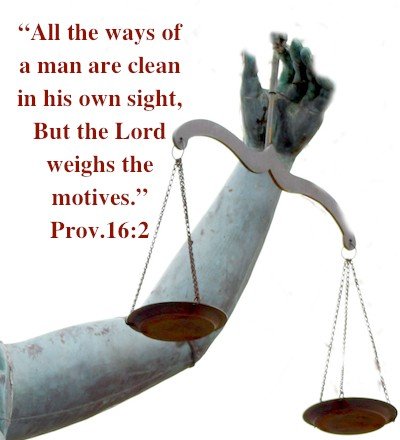
“All the ways of a man are clean in his own eyes; but the LORD weigheth the spirits.” – Proverbs 16:2
________________________________________
Introduction
In the journey of faith, one of the most overlooked yet critically decisive elements of a believer’s life is the condition of their motives. Many focus on actions, outward obedience, visible service, and religious performance, yet God does not primarily evaluate what is seen—He examines what is hidden. The unseen intentions of the heart carry more weight in the courts of Heaven than the most impressive outward works.
It is a dangerous deception to assume that doing “good things” automatically qualifies one as acceptable before God. The reality is far more penetrating: God weighs not just the action, but the spirit behind the action. A sermon preached for applause, a gift given for recognition, a ministry built for personal influence—these may appear righteous before men but can be utterly rejected by God if rooted in self-centered ambition.
This lesson calls for a deep and uncompromising examination of the believer’s inner life. It is an invitation to submit one’s motives to the searching light of the Holy Spirit, who alone reveals truth without distortion. Without such divine scrutiny, a person can spend years building what they believe is a life of obedience, only to discover in the end that it was founded on self-interest rather than surrender.
The message is not merely corrective—it is protective. It seeks to rescue the believer from the tragedy of living a life that appears successful outwardly but is spiritually bankrupt inwardly. For motives determine not only the value of our works but also the direction of our eternal destiny.
________________________________________
The Divine Standard: God Judges Motives, Not Just Actions
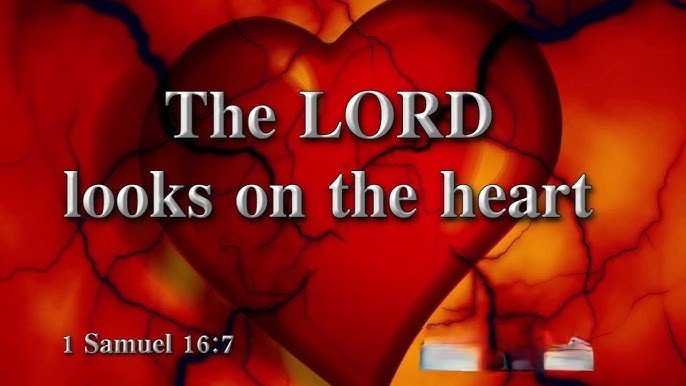
“But the LORD said unto Samuel, Look not on his countenance, or on the height of his stature… for the LORD seeth not as man seeth; for man looketh on the outward appearance, but the LORD looketh on the heart.” – 1 Samuel 16:7
________________________________________
God operates on a standard that is entirely different from human judgment. While people evaluate based on visible outcomes, God evaluates based on invisible intentions. This means that two individuals can perform the exact same act, yet receive completely different responses from God because their motives differ.
A person may pray loudly, give generously, or lead effectively, but if their inner drive is self-promotion, recognition, or control, then their works are contaminated. God does not reward what originates from selfish ambition, even if it produces impressive results.
This truth dismantles religious hypocrisy at its core. It exposes the futility of trying to impress God with external performance while neglecting internal transformation. It forces the believer to confront a sobering reality: nothing can be hidden from God.
________________________________________
The Danger of Self-Centered Motives
“Let nothing be done through strife or vainglory; but in lowliness of mind let each esteem other better than themselves.” – Philippians 2:3
________________________________________
Self-centered motives are subtle, deceptive, and deeply rooted in the fallen nature of humanity. They often disguise themselves in spiritual language, making them difficult to detect without the help of the Holy Spirit.
A person may claim to serve God while actually serving their own ego. They may pursue ministry not to glorify God, but to gain influence, admiration, or control over others. This is the essence of spiritual corruption—it uses the name of God to advance the agenda of self.
Such motives are not neutral; they are offensive to God. They distort the purpose of service and turn what should be an act of worship into an act of rebellion. To exalt self, even under the banner of religion, is to oppose the very nature of Christ.
________________________________________
The Call to Die to Self
“Then said Jesus unto his disciples, If any man will come after me, let him deny himself, and take up his cross, and follow me.” – Matthew 16:24
________________________________________
The foundation of true discipleship is the death of self. This is not symbolic language—it is a spiritual reality that must be embraced daily. To follow Christ is to reject the dominance of personal ambition, personal glory, and personal control.
Jesus did not offer a path that accommodates self-centered living. He demanded surrender. The cross represents the end of self-rule and the beginning of divine authority in a person’s life.
When a believer refuses to die to self, they inevitably corrupt their motives. Their service becomes selective, their obedience becomes conditional, and their faith becomes self-serving. Such a life cannot produce genuine spiritual fruit.
________________________________________
False Messengers and the Illusion of Religious Success
“For such are false apostles, deceitful workers, transforming themselves into the apostles of Christ.” – 2 Corinthians 11:13
________________________________________
Not everyone who appears spiritual is sent by God. There are individuals who build platforms, attract followers, and create impressive religious systems, yet their motives are entirely disconnected from truth.
These individuals often promote themselves rather than Christ. They make exaggerated claims about their abilities, present a polished image of success, and appeal to the desires of the flesh. Their message may be appealing, but it lacks the substance of truth.
Such people are dangerous because they normalize corrupted motives. They make self-centered ambition appear acceptable, even admirable. But behind the façade lies fear—fear of exposure, fear of losing status, and fear of losing control.

________________________________________
The Consequences of Corrupt Motives
“Be not deceived; God is not mocked: for whatsoever a man soweth, that shall he also reap.” – Galatians 6:7
________________________________________
Corrupt motives carry consequences that cannot be avoided. While they may produce temporary success, they ultimately lead to spiritual destruction. A person who consistently chooses self over God hardens their heart and distances themselves from truth.
The pursuit of fame, wealth, and recognition as primary goals creates an internal instability. No amount of success can bring peace because the foundation is flawed. Fear becomes a constant companion, driving the person to strive harder in an attempt to maintain their position.
But there is a final accountability that cannot be escaped. Every hidden motive will be exposed, and every work will be tested. Those who have built on self will find that their efforts have no eternal value.
________________________________________
The Role of the Holy Spirit in Examining Motives
“Search me, O God, and know my heart: try me, and know my thoughts.” – Psalm 139:23
________________________________________
The Holy Spirit is the only reliable examiner of the human heart. Self-examination alone is insufficient because the heart is inherently deceptive. Without divine intervention, a person can justify even the most corrupt motives.
Inviting the Holy Spirit to examine one’s motives requires humility and courage. It means being willing to confront uncomfortable truths and to repent when necessary. This process is not meant to condemn but to cleanse.
When the Holy Spirit reveals wrong motives, the appropriate response is not defense but repentance. This is how transformation begins—by acknowledging truth and surrendering to it.
________________________________________
The Deceptive Nature of the Human Heart
“The heart is deceitful above all things, and desperately wicked: who can know it?” – Jeremiah 17:9
________________________________________
The human heart has an extraordinary ability to deceive itself. It can rationalize selfishness, justify pride, and disguise ambition as purpose. This is why many people genuinely believe they are right, even when they are far from truth.
Ignoring this reality is dangerous. It leads to a false sense of security and prevents genuine transformation. Recognizing the deceptive nature of the heart is the first step toward spiritual integrity.
A wise believer does not trust their own judgment blindly. They submit their thoughts, intentions, and desires to the scrutiny of God, knowing that only He can reveal the truth.
________________________________________
Living in the Purity of Surrendered Motives
“Whether therefore ye eat, or drink, or whatsoever ye do, do all to the glory of God.” – 1 Corinthians 10:31
________________________________________
A life of pure motives is not achieved through perfection but through surrender. It is a continuous decision to align one’s intentions with the will of God. This transforms even the simplest actions into acts of worship.
When motives are pure, there is freedom—freedom from the need for validation, freedom from fear, and freedom from striving. The believer becomes secure in their identity, knowing that their value is not determined by human approval but by divine acceptance.
This is the life God desires: not one of performance, but one of authenticity and submission.
________________________________________
Summary
The condition of one’s motives is central to their relationship with God. While outward actions are visible, it is the hidden intentions of the heart that determine acceptance before Him. Self-centered motives corrupt even the most impressive works, while surrendered motives sanctify even the simplest acts.
The Holy Spirit plays a crucial role in revealing and correcting wrong motives, guiding the believer into truth and purity. Without this divine examination, a person risks living a life built on deception.
________________________________________
Conclusion
The call to examine one’s motives is not optional—it is essential. It is the difference between true discipleship and religious deception. A life that is not submitted to the scrutiny of the Holy Spirit is vulnerable to self-deception and spiritual failure.
God is not interested in outward success that is rooted in inward corruption. He desires truth in the inward parts. He seeks those who will serve Him not for personal gain, but out of genuine love and surrender.
________________________________________
Call to Action
Begin today by inviting the Holy Spirit to examine your motives. Do not approach this casually—approach it with seriousness and honesty. Ask yourself why you do what you do. Be willing to confront the truth, no matter how uncomfortable it may be.
Repent where necessary. Surrender where required. Align your motives with the will of God and commit to living a life that is rooted in truth.
________________________________________
Final Word of Encouragement
There is great hope for those who are willing to be corrected. God does not expose motives to destroy, but to restore. Every surrendered heart becomes a vessel of honor, purified and prepared for His purpose.
Do not fear the process of examination. Embrace it, for it leads to freedom, clarity, and true spiritual strength.
________________________________________
Salvation Prayer
Lord Jesus Christ,
I come before You today acknowledging that my heart is not perfect and that my motives have not always been pure. I repent of every selfish intention, every hidden pride, and every desire that has not honored You.
Search my heart, O God, and reveal anything within me that is not aligned with Your will. Cleanse me from all unrighteousness and create in me a pure heart.
I surrender my life completely to You. I choose to deny myself, take up my cross, and follow You. Be my Lord and my Savior. Guide me by Your Holy Spirit and teach me to live for Your glory alone.
From this day forward, I commit to walking in truth, surrender, and obedience. Thank You for Your mercy, Your grace, and the gift of salvation. In Jesus’ name, Amen.

















Leave a Comment