

Forgive and Live: The Transforming Power of Mercy in the Kingdom of God By: Major Frank Materu
Key Scripture:
“For if ye forgive men their trespasses, your heavenly Father will also forgive you: But if ye forgive not men their trespasses, neither will your Father forgive your trespasses.” — Matthew 6:14–15
________________________________________
Introduction
Forgiveness is not a suggestion within the Kingdom of God—it is a command, a principle, and a pathway to life. Yet despite its centrality, forgiveness remains one of the most resisted and misunderstood practices among believers. Many desire mercy for themselves but struggle to extend that same mercy to others. This contradiction reveals a deeper spiritual issue: a failure to fully comprehend the nature of grace.
The message before us confronts this issue with uncompromising clarity. It declares that forgiveness is not optional for those who have received forgiveness. It exposes the destructive power of bitterness and challenges the self-centered mindset that refuses to release offenses. More importantly, it reveals that forgiveness is directly tied to life itself—spiritually, emotionally, and even relationally.
In a world driven by self-interest, retaliation, and emotional entitlement, the call to forgive can feel unnatural, even unjust. People often equate forgiveness with weakness or surrender. Others believe that holding onto grudges somehow preserves their dignity or protects them from further harm. But these assumptions are fundamentally flawed.
Bitterness does not protect—it poisons. Unforgiveness does not empower—it enslaves. The one who refuses to forgive is not holding another person captive; they are binding themselves to pain, resentment, and spiritual stagnation.
This lesson goes deeper than surface-level encouragement. It dismantles the illusion that one can live in God’s grace while withholding it from others. It also addresses the difference between givers and takers, revealing how forgiveness is closely tied to a life of generosity, humility, and genuine love.
Furthermore, it brings into focus the responsibility to honor relationships—particularly with parents and those who have invested in our lives—while maintaining a posture of forgiveness even in the face of deep betrayal or opposition.
Above all, this teaching centers on the ultimate example: Jesus Christ. His life and sacrifice define what true forgiveness looks like. He did not merely speak about love—He embodied it under the most extreme conditions of injustice and suffering.
To understand forgiveness, therefore, is to understand the very heart of God. And to practice forgiveness is to walk in alignment with His Kingdom.

________________________________________
The Command to Forgive as a Condition for Life
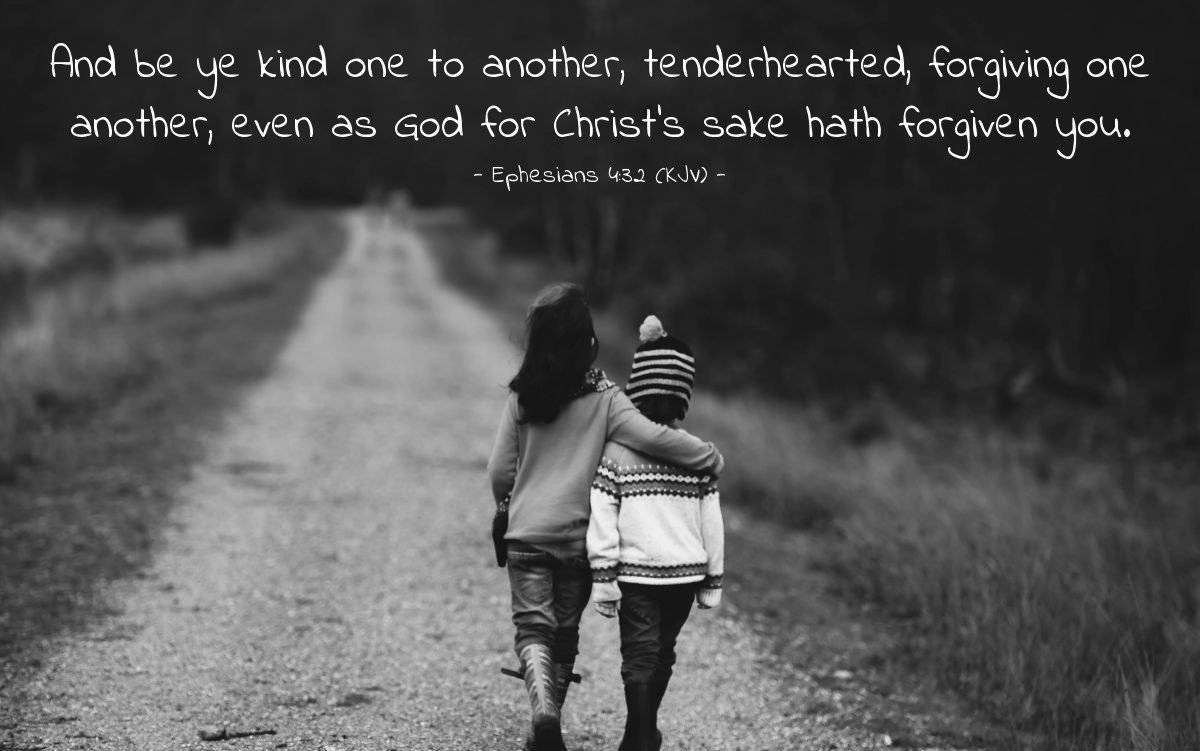
“And be ye kind one to another, tenderhearted, forgiving one another, even as God for Christ’s sake hath forgiven you.” — Ephesians 4:32
________________________________________
Forgiveness is not presented as an optional virtue; it is a defining characteristic of those who belong to God. The instruction is clear: as you have been forgiven, so must you forgive.
This principle is rooted in divine justice and mercy. Every believer stands in a position of having received undeserved grace. No one earns forgiveness; it is given freely through the sacrifice of Jesus Christ. To then refuse to extend that same grace to others is not only inconsistent—it is a rejection of the very foundation upon which one’s own forgiveness rests.
The message makes a blunt but necessary point: failing to forgive demonstrates a lack of understanding of God’s Kingdom. It is not merely an emotional struggle; it is a spiritual contradiction.
Forgiveness is also directly connected to life. To “forgive and live” is not poetic language—it is a spiritual reality. When forgiveness flows, life flourishes. When bitterness takes root, life begins to deteriorate.
________________________________________
The Destructive Power of Bitterness and Unforgiveness
“Looking diligently lest any man fail of the grace of God; lest any root of bitterness springing up trouble you, and thereby many be defiled.” — Hebrews 12:15
________________________________________
Bitterness is not passive—it is active and corrosive. It grows, spreads, and contaminates every area of life. What begins as a justified hurt can evolve into a consuming force that distorts perception, damages relationships, and hinders spiritual growth.
Unforgiveness creates a prison of the mind and heart. It replays offenses, magnifies pain, and keeps individuals emotionally tied to past wounds. Instead of moving forward, they remain anchored in what was done to them.
The message does not soften this reality. It calls such a mindset foolish—not as an insult, but as a direct confrontation of its consequences. To hold onto bitterness while expecting to thrive spiritually is self-deception.
Moreover, unforgiveness disrupts one’s relationship with God. It blocks the flow of grace, not because God is unwilling to forgive, but because the individual has chosen a posture that contradicts His nature.
________________________________________
Givers and Takers: The Heart Revealed
“It is more blessed to give than to receive.” — Acts 20:35
________________________________________
A powerful distinction is drawn between two types of people: givers and takers. This is not merely about material generosity; it is about the orientation of the heart.
Takers are self-centered. Their primary concern is their own benefit, comfort, and advancement. They measure relationships by what they can gain. Forgiveness is difficult for them because it requires releasing control and relinquishing the right to retaliation.
Givers, on the other hand, operate from a place of compassion and selflessness. They find joy in serving others and lifting burdens. Forgiveness flows more naturally from this mindset because it aligns with their desire to restore rather than to punish.
This distinction exposes a deeper truth: forgiveness is not just an action; it is a reflection of identity. Those who understand God’s grace become givers of that grace.
________________________________________
Honoring Relationships While Walking in Forgiveness
“Honour thy father and thy mother: that thy days may be long upon the land which the Lord thy God giveth thee.” — Exodus 20:12
________________________________________
The message addresses a sensitive but critical area: the responsibility to honor parents and those who have contributed to one’s life. In a culture that often prioritizes independence over responsibility, this principle is frequently neglected.
Honoring does not mean agreeing with everything or ignoring wrongdoing. It means recognizing the role that individuals have played and responding with respect and care.
Even in cases where parents have caused harm or opposed one’s spiritual journey, forgiveness remains essential. This does not excuse their actions, but it prevents those actions from defining one’s response.
The failure to honor relationships reflects a broader issue of self-centeredness. It reveals a mindset that values personal comfort over relational responsibility.
True maturity is demonstrated not by how one responds to kindness, but by how one responds to difficulty.
________________________________________
The Example of Jesus Christ: Love in Action
“Father, forgive them; for they know not what they do.” — Luke 23:34
________________________________________
Jesus Christ is the ultimate model of forgiveness. His life was marked by rejection, misunderstanding, betrayal, and injustice. Yet He consistently responded with compassion and obedience to God’s will.
On the cross, in the midst of unimaginable suffering, He chose forgiveness. This was not a symbolic gesture—it was a demonstration of divine love in its purest form.
The message emphasizes that Jesus did not merely teach principles; He lived them. His actions validated His words. This is the standard for believers—not theoretical love, but manifested love.
To follow Christ is to adopt His approach to forgiveness. It is to release offenses, even when they are undeserved, and to prioritize obedience over emotion.
________________________________________
Authentic Love Versus Empty Words
“But be ye doers of the word, and not hearers only, deceiving your own selves.” — James 1:22
________________________________________
There is a clear warning against hypocrisy. It is easy to speak about love, forgiveness, and faith while living in contradiction to those values.
True love is not defined by words but by actions. It is demonstrated through consistent behavior, especially in challenging situations.
The message challenges the idea of self-glorification—the pursuit of personal recognition and validation. This mindset is incompatible with genuine love because it places self at the center.
Forgiveness, therefore, becomes a test of authenticity. It reveals whether one’s faith is genuine or merely performative.
________________________________________
Living in the Reality of Grace and Redemption
“In whom we have redemption through his blood, the forgiveness of sins, according to the riches of his grace.” — Ephesians 1:7
________________________________________
At the heart of this teaching is the recognition of what has been received through Christ. Salvation is described as a free gift—unearned, undeserved, and complete.
This reality should transform how believers live. Gratitude replaces entitlement. Humility replaces pride. Generosity replaces selfishness.
Forgiveness becomes a natural response, not because it is easy, but because it reflects an understanding of grace.
To live in resentment after receiving redemption is to ignore the magnitude of what has been given.
________________________________________
Summary
This lesson presents forgiveness as a central principle of the Kingdom of God. It exposes the dangers of bitterness, the selfishness of a taker mentality, and the importance of honoring relationships.
It highlights the example of Jesus Christ as the ultimate standard and challenges believers to move beyond words into action. Forgiveness is shown to be both a command and a pathway to life.
________________________________________
Conclusion
Forgiveness is not about minimizing pain or excusing wrongdoing. It is about choosing freedom over bondage, life over decay, and obedience over emotion.
The refusal to forgive is a heavy burden to carry, and it leads nowhere but deeper into darkness. In contrast, forgiveness opens the door to healing, restoration, and spiritual vitality.
This is not an easy path, but it is the right one.
________________________________________
Call to Action
Examine your heart honestly. Identify any areas of unforgiveness and make a deliberate decision to release them. Do not wait for feelings to change—act in obedience.
Choose to be a giver, not a taker. Extend grace as you have received it. Honor those who have contributed to your life, and walk in humility and gratitude.
________________________________________
Final Word of Encouragement
You are not called to carry the weight of bitterness. You are called to walk in freedom. Forgiveness may feel costly, but the cost of unforgiveness is far greater.
As you choose to forgive, you align yourself with God’s heart and open your life to His peace and provision.
Stand firm in this truth: forgiveness is not loss—it is victory.
________________________________________
Salvation Prayer
Heavenly Father,
I come before You with a humble heart, acknowledging my need for Your forgiveness and grace. I recognize that I have sinned and fallen short of Your glory.
I believe that Jesus Christ is Your Son, that He died for my sins, and that He rose again to give me new life. Today, I choose to turn away from sin and from every form of bitterness and unforgiveness.
I ask You to cleanse my heart, renew my mind, and fill me with Your Spirit. Teach me to forgive as You have forgiven me. Help me to walk in love, humility, and obedience.
From this day forward, I surrender my life to You. Lead me in Your truth and establish me in Your Kingdom.
In Jesus’ Name,
Amen.















Leave a Comment