

False Security and True Safety: Trusting God Beyond Systems of Control By: Major Frank Materu
Key Scripture:
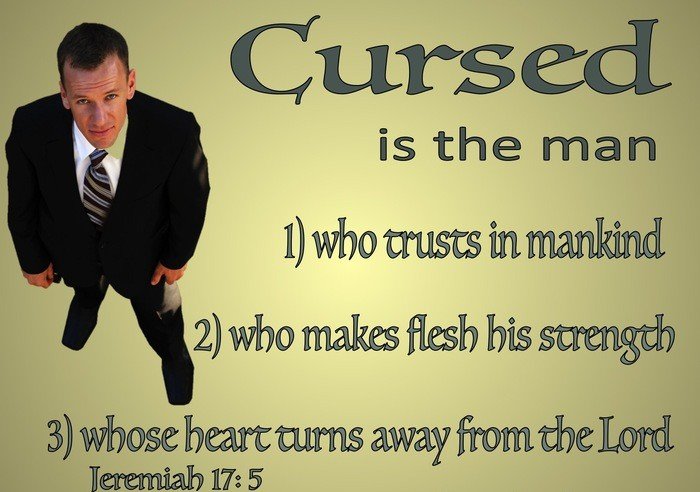
“Thus saith the Lord; Cursed be the man that trusteth in man, and maketh flesh his arm, and whose heart departeth from the Lord.” — Jeremiah 17:5
________________________________________
Introduction
The human desire for safety and security is universal. Across cultures and generations, people invest enormous resources—time, money, and intellect—into building environments that promise protection from danger. From fortified homes to advanced surveillance systems, modern society has engineered sophisticated structures designed to create a sense of control over uncertainty. Yet, beneath this pursuit lies a fundamental question: does external security truly guarantee safety?
The message before us confronts this assumption with unsettling clarity. It challenges the belief that physical barriers, technological advancements, and social status can ultimately secure human life. It exposes a deeper reality—that systems built on human control are inherently limited, and when trusted as ultimate safeguards, they can fail catastrophically.
This is not merely a critique of infrastructure or innovation. It is a spiritual diagnosis. The issue is not the existence of security systems but the misplaced trust placed in them. When individuals shift their reliance from God to human constructs, they enter a fragile state where perceived safety becomes an illusion.
The narrative presented—a tragic scenario within a gated community—serves as a powerful metaphor. It illustrates how environments designed for protection can become instruments of destruction when the underlying foundation is flawed. The very systems intended to safeguard life can, under certain conditions, amplify vulnerability.
Moreover, the message extends beyond physical security into the realm of surveillance and control. It raises concerns about the erosion of privacy in an age dominated by technology. Devices that promise convenience often come with hidden costs—constant monitoring, data collection, and the loss of personal autonomy. This reality forces a reevaluation of what it means to be truly secure.
At its core, this lesson is about trust. It examines where individuals place their confidence and how those choices shape their outcomes. It contrasts the temporary, unreliable nature of human systems with the enduring, unshakable security found in God.
The call is not to abandon progress but to realign priorities. Security must not be rooted in walls, gates, or devices, but in a relationship with the One who sees all, knows all, and sustains all. Without this foundation, even the most advanced systems cannot guarantee safety.
________________________________________
The Illusion of Safety in Human Systems
“Except the Lord keep the city, the watchman waketh but in vain.” — Psalm 127:1
________________________________________
Human systems of security are designed with the intention of protection, yet they are inherently limited. Gated communities, surveillance technologies, and controlled environments create a perception of safety, but they cannot eliminate risk. They can delay, reduce, or redirect danger—but they cannot ultimately prevent it.
The message exposes a critical flaw: when people place absolute trust in these systems, they begin to neglect the reality of their limitations. A gated community may restrict access, but it does not guarantee the character of those within. Walls can keep people out, but they can also trap those inside.
This illusion of safety becomes dangerous when it replaces vigilance and discernment. People lower their guard, assuming that the environment itself is sufficient to protect them. In doing so, they become more vulnerable, not less.
True security cannot be engineered solely through physical means. It requires a deeper foundation—one that transcends human capability.
________________________________________
Surveillance, Control, and the Loss of Privacy
“For there is nothing covered, that shall not be revealed; neither hid, that shall not be known.” — Luke 12:2
________________________________________
The advancement of technology has introduced a new dimension of security—constant surveillance. Cameras, monitoring systems, and data tracking are often presented as tools for protection. However, they also raise serious ethical and spiritual concerns.
The message highlights the invasive nature of such systems. When every movement, conversation, and action is recorded, privacy ceases to exist. Individuals become subjects of observation rather than participants in freedom.
This level of control creates a paradox. In the name of security, people surrender autonomy. They accept intrusion in exchange for perceived safety, often without fully understanding the implications.
From a spiritual perspective, this raises a profound question: if God already sees all, why do humans feel the need to replicate omniscience through technology? The answer lies in control. Human systems seek to replace divine oversight with mechanical observation.
Yet, unlike God’s watchfulness—which is rooted in love and justice—human surveillance can be driven by power, profit, and manipulation. This distinction is crucial.
________________________________________
When Systems Fail: The Fragility of Man-Made Security
“Therefore whosoever heareth these sayings of mine, and doeth them, I will liken him unto a wise man… And the rain descended, and the floods came, and the winds blew… and it fell not: for it was founded upon a rock.” — Matthew 7:24–25
________________________________________
The tragic scenario described in the message illustrates the ultimate weakness of human systems: they can fail suddenly and completely.
A gated community designed for maximum security becomes a trap when its systems malfunction. Locked gates, faulty infrastructure, and delayed emergency response transform a place of safety into a place of destruction.
This is not merely hypothetical. It reflects a broader truth: when systems are over-relied upon, their failure has amplified consequences. The more complex and centralized the system, the more catastrophic its breakdown can be.
The lesson here is not to reject systems but to recognize their limitations. No system is infallible. No structure is immune to failure. When life is built entirely upon such foundations, it becomes vulnerable to collapse.
________________________________________
The Consequences of Misplaced Trust
“Some trust in chariots, and some in horses: but we will remember the name of the Lord our God.” — Psalm 20:7
________________________________________
Trust is not neutral—it has consequences. Where trust is placed determines the direction of one’s life.
The message draws a clear line: trusting in human strength, systems, and resources—referred to as “the arm of flesh”—leads to vulnerability. This is not because these things are inherently evil, but because they are insufficient as ultimate sources of security.
When individuals prioritize material security over spiritual alignment, they gradually distance themselves from God. This shift may not be immediate or obvious, but its effects accumulate over time.
The result is a false sense of confidence. People believe they are secure, yet they are exposed to risks they cannot control or predict.
This is the essence of misplaced trust—it creates the illusion of stability while masking underlying instability.
________________________________________
Spiritual Vulnerability and the Reality of Evil
“The thief cometh not, but for to steal, and to kill, and to destroy.” — John 10:10
________________________________________
The message introduces a dimension often overlooked in discussions of security: spiritual vulnerability. It suggests that when individuals rely solely on physical systems, they become susceptible to forces beyond the material realm.
This is not a call to fear but to awareness. Evil operates in both visible and invisible ways. Systems of exploitation, violence, and corruption are not random—they are often driven by deeper motives and influences.
When people disconnect from God, they lose a critical layer of protection. They become more susceptible to deception, manipulation, and harm.
True security must therefore address both physical and spiritual realities. Ignoring either dimension creates imbalance and risk.
________________________________________
The Supremacy of God as the Source of True Security
“The name of the Lord is a strong tower: the righteous runneth into it, and is safe.” — Proverbs 18:10
________________________________________
In contrast to the fragility of human systems, the message affirms the supremacy of God as the ultimate source of security. Unlike man-made structures, God’s protection is not limited by time, space, or circumstance.
This does not mean that believers are exempt from challenges or danger. Rather, it means that their security is rooted in something unshakable.
God’s protection operates on a different level. It encompasses wisdom, guidance, discernment, and peace. It provides direction in uncertain situations and strength in moments of crisis.
To trust in God is not to reject practical measures, but to place them in proper perspective. They are tools, not foundations.
________________________________________
Living in True Security Through Faith and Obedience
“Thou wilt keep him in perfect peace, whose mind is stayed on thee: because he trusteth in thee.” — Isaiah 26:3
________________________________________
True security is not defined by external conditions but by internal alignment. It is the result of a life anchored in faith and obedience.
This kind of security produces peace—not because circumstances are always favorable, but because trust is placed in a reliable source.
Living in this reality requires intentional choices. It involves prioritizing spiritual growth, maintaining integrity, and cultivating a relationship with God.
It also requires discernment—recognizing when systems are helpful and when they are being relied upon too heavily.
Ultimately, true security is a state of being, not a location or structure.
________________________________________
Summary
This lesson exposes the limitations of human systems of security and the dangers of placing ultimate trust in them. It highlights the illusion of safety created by physical structures and technological advancements, while emphasizing their vulnerability to failure.
It also addresses the deeper issue of misplaced trust, revealing how reliance on human strength can lead to spiritual disconnection and increased vulnerability. In contrast, it affirms God as the only true and reliable source of security.
________________________________________
Conclusion
The pursuit of safety is not wrong, but the foundation upon which it is built determines its effectiveness. Systems can support security, but they cannot replace it.
When trust is misplaced, even the most advanced environments can become dangerous. When trust is rightly placed, even uncertain situations can be navigated with confidence.
The choice is not between security and insecurity—it is between false security and true security.
________________________________________
Call to Action
Reevaluate where you place your trust. Examine the systems and structures you rely on and consider whether they have taken the place of God in your life.
Strengthen your spiritual foundation. Seek wisdom, cultivate discernment, and align your life with principles that endure beyond circumstances.
Do not be deceived by appearances. True security is not found in what surrounds you, but in who sustains you.
________________________________________
Final Word of Encouragement
You are not meant to live in fear or uncertainty. You are called to live in confidence—not in systems, but in God.
When your trust is anchored in Him, you gain access to a security that cannot be shaken, manipulated, or destroyed.
Stand firm in this truth, and let it guide every decision you make.
________________________________________
Salvation Prayer
Heavenly Father,
I come before You acknowledging that I have placed my trust in things that cannot truly save or secure me. I recognize my need for Your guidance, protection, and forgiveness.
I believe that Jesus Christ is Your Son, that He died for my sins, and that He rose again to give me new life. Today, I choose to turn away from misplaced trust and surrender my life to You.
Cleanse me, renew me, and teach me to rely on You above all else. Fill me with Your Spirit and lead me in the path of truth and righteousness.
From this day forward, I choose to trust in You as my source of safety and security.
In Jesus’ Name,
Amen.









Leave a Comment