

LIVING ABOVE FEAR THROUGH FAITH, DIVINE PROTECTION, AND THE PEACE OF GOD By: Major Frank Materu
________________________________________
Key Scripture
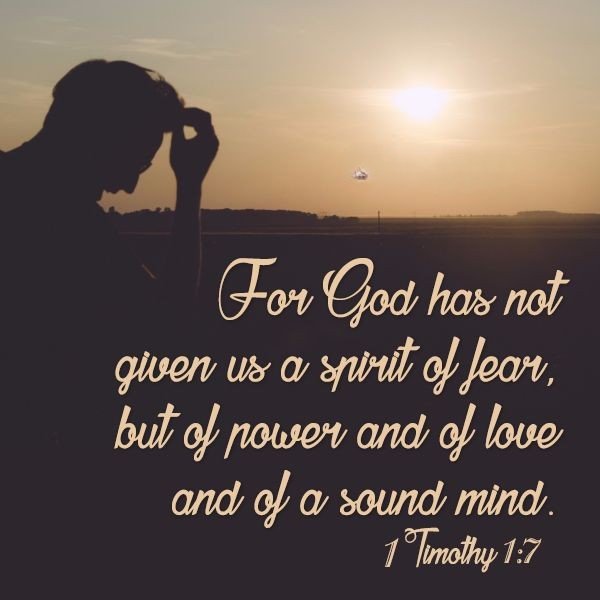
“For God has not given us a spirit of fear, but of power and of love and of a sound mind.” — 2 Timothy 1:7
________________________________________
Introduction
Fear is one of the most dominant spiritual and psychological forces operating in the world today. It shapes decisions, influences behavior, and governs the emotional state of millions of people. In many cases, fear is not merely a human reaction to danger but a structured instrument of oppression used to control societies through uncertainty, misinformation, and spiritual blindness.
In contrast, the biblical worldview presents a radically different foundation for human existence. According to Scripture, humanity is not designed to be governed by fear but by faith, trust, and divine communion with God. The believer is called into a relational reality where God is both Creator and Sustainer, actively involved in the daily preservation and direction of His people.
This lesson explores the theological contrast between fear-driven existence and faith-based living. It further examines the role of divine protection, the peace of God, the danger of negative mental patterns, and the necessity of gratitude as a stabilizing spiritual discipline. The ultimate aim is to establish a clear understanding that believers are not victims of fear but participants in divine governance through the Holy Spirit.
________________________________________
Fear as a Tool of Spiritual and Psychological Oppression
Fear operates as a controlling mechanism that restricts human freedom and distorts perception. When fear dominates the human mind, it produces a constant expectation of danger, leading to anxiety, irrational decisions, and spiritual disconnection.
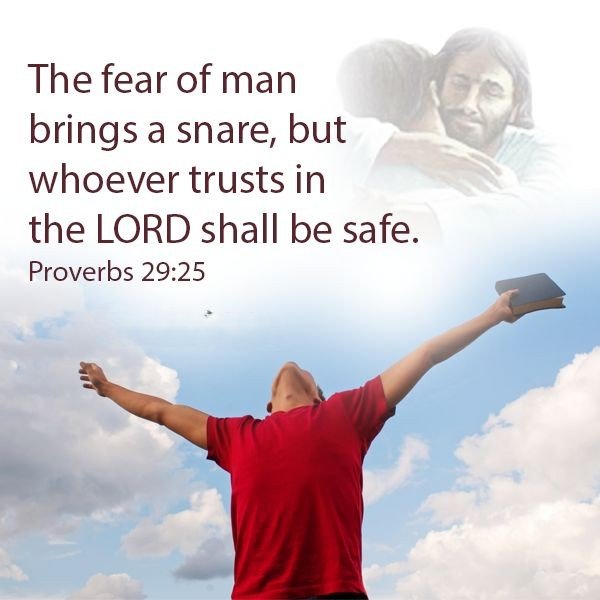
“In the fear of man there is a snare, but whoever trusts in the Lord shall be safe.” — Proverbs 29:25
Fear functions as a snare because it redirects trust away from God and toward unstable human systems. This produces a cycle of dependency on external assurances rather than internal spiritual confidence. Historically and socially, fear has been used to manipulate populations into submission through crisis narratives, economic uncertainty, and ideological pressure.
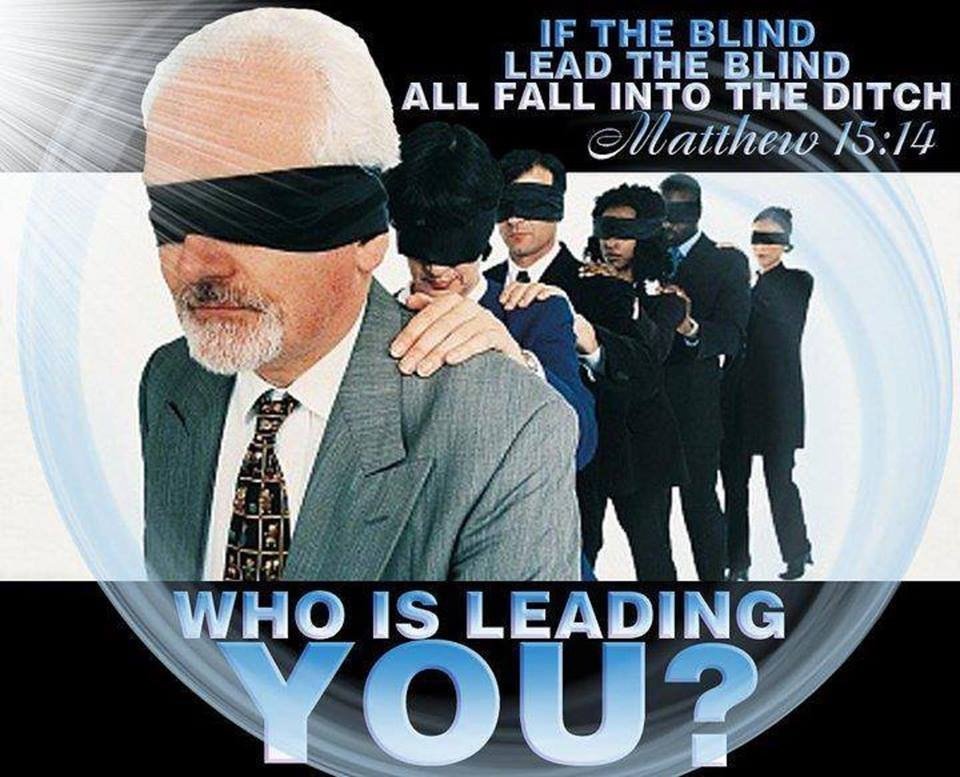
From a spiritual perspective, fear is also associated with darkness because it obscures truth and magnifies imagined threats. It reduces the ability to discern reality accurately, making individuals vulnerable to deception. In this state, fear becomes both a psychological burden and a spiritual limitation.
________________________________________
Divine Protection and the Assurance of God’s Presence
The doctrine of divine protection is central to the believer’s stability in uncertain environments. Scripture consistently affirms that God is not distant but actively present in safeguarding His people.
“The Lord is your keeper; the Lord is your shade at your right hand.” — Psalm 121:5
Divine protection does not imply absence of challenges but rather the assurance of God’s sustaining presence within those challenges. The believer may still observe chaos externally, but internally they are anchored in spiritual security.
This protection is also mediated through the Holy Spirit, who provides guidance, conviction, and directional clarity. The Spirit functions as a continuous internal witness that the believer is not abandoned or left without instruction. In addition, angelic ministry is described in Scripture as part of God’s protective system over His people.
“The angel of the Lord encamps around those who fear Him, and delivers them.” — Psalm 34:7
Thus, divine protection is multidimensional: spiritual, emotional, and situational. It does not eliminate all external conflict but ensures preservation within it.
________________________________________
Faith as the Antidote to Fear
Faith is not passive belief but active reliance on God’s character, promises, and sovereignty. It directly opposes fear by reorienting trust toward divine reliability.
“Now faith is the substance of things hoped for, the evidence of things not seen.” — Hebrews 11:1
Faith stabilizes the mind by shifting focus from visible instability to invisible divine certainty. While fear anticipates loss, faith anticipates divine intervention. This cognitive and spiritual shift transforms how believers interpret circumstances.
Faith also produces resilience. It does not deny hardship but reframes it within the context of God’s greater purpose. As faith increases, fear proportionally decreases because trust replaces uncertainty.
________________________________________
The Discipline of Gratitude as Spiritual Stability
Gratitude is a critical spiritual discipline that protects the believer from mental decay and emotional instability. It trains the mind to recognize divine provision rather than focusing on deficiency.
“Give thanks in all circumstances; for this is the will of God in Christ Jesus for you.” — 1 Thessalonians 5:18
A grateful mindset interrupts cycles of complaint, fear, and despair. It reinforces awareness of God’s past and present faithfulness, thereby strengthening confidence for future challenges.
Gratitude also functions as a form of spiritual resistance against negativity. It prevents the believer from internalizing external chaos as internal identity. Instead, it reinforces a stable identity rooted in divine relationship.
________________________________________
The Peace of God as a Governing Reality
The peace offered by God is not merely emotional relief but a governing spiritual condition that transcends environmental instability.
“And the peace of God, which surpasses all understanding, will guard your hearts and your minds in Christ Jesus.” — Philippians 4:7
This peace acts as a guarding force over the believer’s internal life. It protects cognition, emotion, and spiritual perception from being hijacked by fear-based systems. It is independent of external circumstances and is rooted in divine presence.
Such peace is cultivated through prayer, obedience, and sustained trust in God’s Word. It is not automatic but relational, growing as intimacy with God increases.
________________________________________
The Danger of Negative Mental Cycles and Complaining
Persistent focus on negativity strengthens fear-based thinking patterns. Complaining reinforces a worldview centered on lack, instability, and dissatisfaction.
“Do all things without grumbling or disputing.” — Philippians 2:14
Complaining does not resolve problems; it amplifies emotional distress and weakens spiritual perception. It also diverts attention from divine provision toward perceived absence.
Scripture encourages believers to redirect speech and thought toward constructive acknowledgment of God’s goodness. This reorientation is essential for maintaining spiritual clarity.
________________________________________
Christ as the Model of Endurance and Victory
Jesus Christ is presented as the ultimate example of endurance under suffering without surrendering to fear or retaliation. His obedience demonstrates the highest form of trust in divine purpose.
“Who for the joy that was set before Him endured the cross, despising the shame…” — Hebrews 12:2
Christ’s endurance redefines suffering not as defeat but as a pathway to victory. His resurrection validates the principle that obedience to God leads to ultimate triumph, even through hardship.
Believers are therefore called to emulate this model by maintaining faith under pressure and refusing fear-based responses.
________________________________________
Living as a Victorious and Faith-Driven People
The identity of the believer is not defined by fear, instability, or defeat but by spiritual victory in Christ. This identity requires conscious alignment with God’s truth.
“In all these things we are more than conquerors through Him who loved us.” — Romans 8:37
Victory is not absence of conflict but dominance over fear through faith. It is sustained through continual reliance on God’s Word, Spirit-led living, and disciplined thought life.
________________________________________
Summary
This lesson has established that fear is a controlling spiritual and psychological force that contradicts the believer’s identity in God. In contrast, faith, gratitude, and divine peace form the foundation of a stable and victorious life. God’s protection is active, His presence is continuous, and His peace is sustaining.
________________________________________
Conclusion
The believer is not designed to function under fear but under divine governance. Fear distorts reality, but faith restores clarity. While the world operates through instability and anxiety, the kingdom of God operates through peace, trust, and assurance.
To live in alignment with God is to reject fear-based thinking and embrace a life anchored in divine presence and truth.
________________________________________
Call to Action
Commit to actively rejecting fear-based thoughts and replacing them with Scripture-based declarations of faith. Cultivate gratitude daily, engage in prayer consistently, and intentionally focus on God’s promises rather than external instability.
________________________________________
Final Word of Encouragement
Fear does not define your future. God’s presence does. What surrounds you does not determine what sustains you. As long as you remain anchored in Him, you remain secure, guided, and preserved.
________________________________________
Salvation Prayer
Lord Jesus Christ, I come before You acknowledging that I am a sinner in need of Your grace. I believe that You died for my sins and rose again for my justification. I repent of all my sins and ask You to cleanse me and make me new. I invite You into my life as my Lord and Savior. Fill me with Your Holy Spirit and guide me in Your truth from this day forward. I choose to follow You all the days of my life. Amen.












Leave a Comment