

A Faith That Waits for the Lord: A Deep Spiritual Lesson from Micah Chapter Seven By: Major Frank Materu
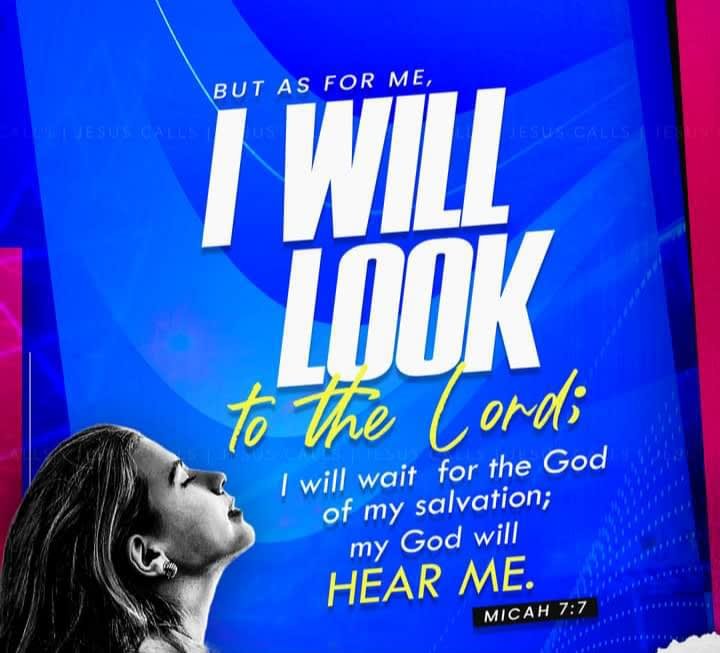
Key Scripture: Micah 7:7 — “Therefore I will look unto the LORD; I will wait for the God of my salvation: my God will hear me.”
________________________________________
Introduction
The book of Micah stands as one of the most piercing and honest prophetic voices in the Old Testament. Written during a period of moral collapse, social injustice, political corruption, and spiritual hypocrisy in both Judah and Israel, Micah confronts a nation that outwardly claimed covenant identity while inwardly living in rebellion against God. Chapter seven, the final chapter of the book, brings this prophetic message to its climax. It is not merely a conclusion; it is a spiritual journey that moves the reader from despair to hope, from confession to restoration, and from judgment to mercy.
Micah chapter seven is deeply personal in tone. The prophet does not speak only as a messenger of God addressing others; he speaks as one who feels the pain of living in a broken society. He laments the disappearance of godliness, mourns the collapse of trust even within families, and acknowledges the weight of divine discipline upon the people. Yet, remarkably, this chapter does not end in sorrow. It rises into one of the most beautiful declarations of faith, hope, and divine compassion found anywhere in Scripture.
This lesson explores Micah chapter seven as a timeless spiritual mirror for every generation. It speaks powerfully to societies experiencing moral decay, to believers wrestling with disappointment and injustice, and to anyone seeking assurance that God’s mercy is greater than human failure. Through careful theological reflection and spiritual application, this lesson reveals that even in the darkest moments of history and personal life, God remains faithful, forgiving, and mighty to restore.
________________________________________
The Lament of a Spiritually Desolate Society
“Woe is me! for I am as when they have gathered the summer fruits, as the grape gleanings of the vintage: there is no cluster to eat: my soul desired the first ripe fruit.” (Micah 7:1)
________________________________________
Micah opens this chapter with a cry of anguish. His lament is agricultural in imagery but spiritual in meaning. Just as a field stripped after harvest offers no nourishment, so the nation offered no evidence of righteousness. Godly people had become rare, integrity had vanished from public life, and moral leadership had collapsed. This was not a temporary setback but a systemic spiritual failure.
The prophet declares that faithful people had disappeared from the land. Violence, deception, and corruption dominated every level of society. Leaders demanded bribes, judges twisted justice, and influential people conspired together for personal gain. Even those considered the best among them were compared to thorny hedges—harmful rather than helpful.
This passage confronts the painful reality that religious language and national identity cannot substitute for genuine righteousness. A society may appear prosperous and organized, yet be spiritually barren in the eyes of God. Micah’s lament reminds believers that moral decay is first a spiritual issue before it becomes a social one.
________________________________________
The Collapse of Trust and Human Relationships
“Trust ye not in a friend, put ye not confidence in a guide: keep the doors of thy mouth from her that lieth in thy bosom.” (Micah 7:5)
________________________________________
The depth of societal decay described by Micah is revealed in the breakdown of trust within the most intimate relationships. Friendship, leadership, and even family bonds had become unreliable. Betrayal was no longer the exception; it had become the norm. Parents and children were set against one another, and loyalty was sacrificed on the altar of self-interest.
This level of moral disintegration illustrates what happens when the fear of the Lord is removed from a society. When truth is abandoned and selfish ambition reigns, human relationships suffer irreparable damage. Jesus Himself later referenced this passage to describe the cost of discipleship in a fallen world, affirming its enduring relevance.
Yet this sobering reality also teaches a vital spiritual lesson: ultimate security cannot be found in human systems or relationships. While God values community and family, Micah reminds us that only God is completely trustworthy. When human trust fails, divine faithfulness remains.
________________________________________
A Defiant Declaration of Faith in God Alone
“Therefore I will look unto the LORD; I will wait for the God of my salvation: my God will hear me.” (Micah 7:7)
________________________________________
This verse marks a dramatic turning point in the chapter. In the midst of widespread corruption and personal disappointment, Micah makes a deliberate choice of faith. He does not deny reality, nor does he minimize the severity of the situation. Instead, he redirects his hope from humanity to God.
Waiting on the Lord in this context is not passive resignation but active trust. It is a posture of confident expectation rooted in the character of God. Micah affirms that God hears, God saves, and God remains attentive to the cries of those who trust Him.
This declaration stands as a model for believers facing discouragement. True faith is not the absence of struggle; it is the refusal to surrender hope. Even when circumstances seem overwhelming, the believer can declare with confidence that God is still listening.
________________________________________
From Discipline to Deliverance: The Hope Beyond Failure
“Rejoice not against me, O mine enemy: when I fall, I shall arise; when I sit in darkness, the LORD shall be a light unto me.” (Micah 7:8)
________________________________________
Micah acknowledges personal and national failure without despair. He recognizes that discipline from the Lord is deserved because of sin, yet he also understands that God’s discipline is not meant to destroy but to restore. The prophet accepts responsibility while maintaining hope.
This passage reveals the redemptive nature of God’s judgment. Darkness is not permanent for those who trust in Him. Falling is not final when repentance is genuine. God’s light shines most powerfully in moments of acknowledged weakness.
The believer learns here that confession and humility open the door to restoration. God opposes pride but gives grace to the repentant. Even when consequences must be faced, divine mercy remains available.
________________________________________
The Promise of Restoration and Divine Vindication
“In the day that thy walls are to be built, in that day shall the decree be far removed.” (Micah 7:11)
________________________________________
God promises restoration beyond judgment. The rebuilding of walls symbolizes renewed security, dignity, and identity. The people who were scattered and humiliated would be gathered again. God Himself would reverse the effects of disobedience.
This restoration is not merely physical but spiritual. It reflects God’s covenant faithfulness and His commitment to fulfill His promises despite human failure. However, the chapter also makes clear that restoration belongs to those who repent, not to those who persist in rebellion.
God’s vindication of His people ultimately serves a greater purpose: the revelation of His glory among the nations. When God restores, He testifies to His power, mercy, and sovereignty.
________________________________________
The God Who Delights in Mercy
“Who is a God like unto thee, that pardoneth iniquity, and passeth by the transgression of the remnant of his heritage?” (Micah 7:18)
________________________________________
The book concludes with one of the most profound descriptions of God’s character in Scripture. Micah marvels at a God who forgives, who does not remain angry forever, and who delights in mercy. This declaration directly reflects the meaning of Micah’s name: “Who is like the LORD?”
God’s forgiveness is not superficial. He subdues sin, removes guilt, and casts transgressions into the depths of the sea. This imagery communicates complete and irreversible forgiveness. God does not merely overlook sin; He conquers it.
The chapter ends with a reaffirmation of God’s faithfulness to His covenant promises. What He pledged to Abraham and Jacob, He will fulfill. Divine mercy is anchored in divine faithfulness.
________________________________________
Summary
Micah chapter seven presents a powerful spiritual journey from despair to hope. It confronts the reality of moral decay, exposes the fragility of human trust, and calls believers to place their confidence in God alone. Through repentance, waiting, and faith, the chapter reveals God as a restorer, a defender, and a merciful Redeemer.
________________________________________
Conclusion
Micah seven teaches that no matter how dark society becomes or how deeply one has fallen, God’s mercy remains greater. Judgment is never God’s final word for the repentant. Restoration, forgiveness, and hope are always within reach for those who wait upon the Lord.
________________________________________
Call to Action
Believers are called to examine their own lives honestly, to reject compromise, and to place unwavering trust in God rather than in human systems. In times of darkness, the call is to wait, repent, and hope in the Lord who hears and saves.
________________________________________
Final Word of Encouragement
If you find yourself discouraged by the condition of the world or burdened by personal failure, remember this truth: God delights in mercy. He has not abandoned His people, and He has not forgotten His promises. Wait on Him. He will be your light.
________________________________________
Salvation Prayer
Lord God, I come before You acknowledging my sin and my need for Your mercy. I believe that You are faithful and that Your grace is greater than my failures. I repent of my sins and ask You to cleanse my heart. I receive Your forgiveness and place my trust in You alone. Be my Lord, my Savior, and my light. From this day forward, I choose to follow You in faith and obedience. In Jesus’ name, Amen.












Leave a Comment