

TITHING, GRACE, AND CHRISTIAN GIVING: A BIBLICAL UNDERSTANDING OF STEWARDSHIP UNDER THE NEW COVENANT By: Major Frank Materu
Key Scripture
“Every man according as he purposeth in his heart, so let him give; not grudgingly, or of necessity: for God loveth a cheerful giver.” (2 Corinthians 9:7)
Introduction
Among the many subjects discussed within the Christian Church, few have generated as much debate, confusion, conviction, and controversy as the subject of tithing and Christian giving. For centuries, believers have wrestled with questions concerning financial stewardship, support of ministry, generosity toward the needy, and the relationship between Old Testament commandments and New Testament practices. Some Christians have been taught that every believer is under a continuing obligation to give ten percent of their income to God, while others maintain that the New Covenant established through Jesus Christ introduced a different approach to giving that is based not upon legal obligation but upon grace, gratitude, and voluntary stewardship.
The importance of this discussion extends beyond money. At its core lies a deeper issue concerning how believers understand Scripture, interpret God's covenants, and apply biblical truth to their daily lives. The Bible reveals God's redemptive plan unfolding progressively throughout history. God established covenants with His people at different times and for different purposes. The covenant made with Israel through Moses included laws, ordinances, ceremonies, sacrifices, priesthood regulations, and requirements that governed the life of the nation. These provisions were given by God for a specific purpose and played a significant role in preparing the way for the coming of Jesus Christ.
When Jesus came into the world, He fulfilled what the Law and the Prophets anticipated. Through His death, burial, resurrection, and ascension, He established a New Covenant founded upon better promises. Believers are no longer justified by observing the Law of Moses but by faith in Jesus Christ. This raises an important question: if Christians are under the New Covenant, what place does tithing have in their lives? Is it a continuing legal obligation, or has it been replaced by broader principles of stewardship and generosity?
At the same time, believers must be careful not to use grace as an excuse for selfishness. Scripture never encourages stinginess, greed, or indifference toward God's work. On the contrary, the New Testament repeatedly calls believers to sacrificial generosity, compassionate giving, support of Gospel ministry, and care for those in need. Therefore, the issue is not whether Christians should give. The issue is understanding how Christians should give and what biblical principles govern their stewardship under the New Covenant.
A careful study of Scripture reveals that God has always been more concerned with the condition of the heart than with the mere transfer of material possessions. Throughout both the Old and New Testaments, God consistently emphasizes willingness, gratitude, faith, love, and devotion as the proper motivations for giving. Understanding these truths allows believers to move beyond legalism and embrace a mature, Christ-centered approach to stewardship that honors God and advances His Kingdom.

________________________________________
The Origin and Purpose of Tithing Under the Old Covenant
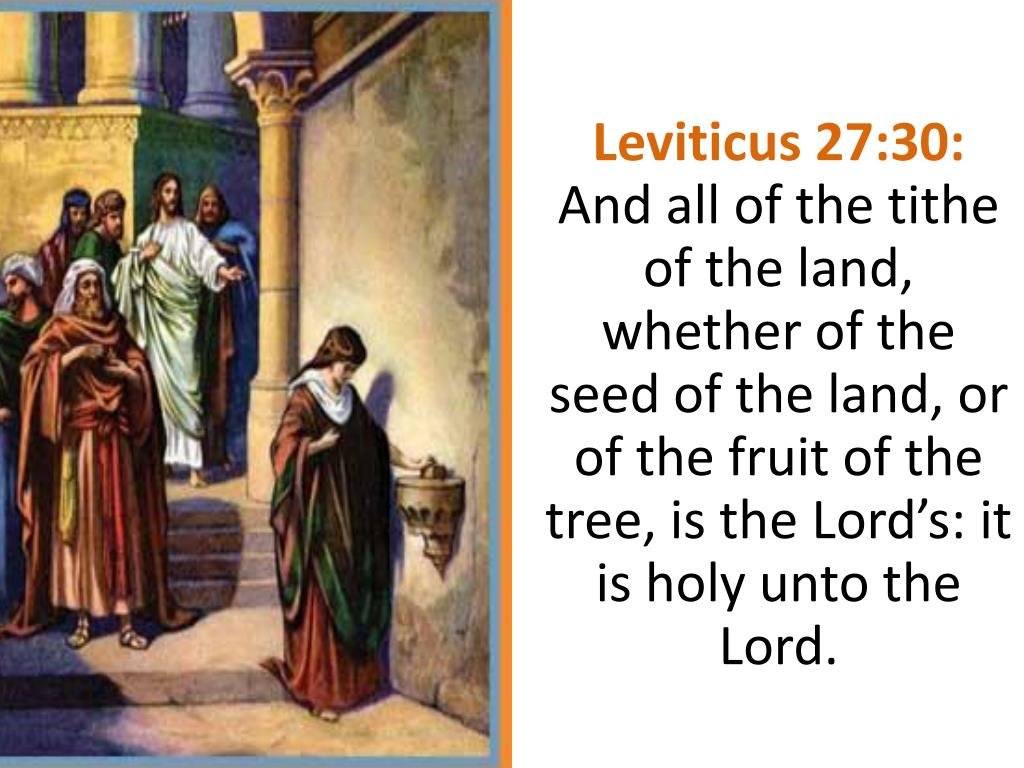
“And all the tithe of the land, whether of the seed of the land, or of the fruit of the tree, is the LORD'S: it is holy unto the LORD.” (Leviticus 27:30)
To understand the biblical discussion concerning tithing, it is necessary to begin with its purpose within the Old Covenant. Under the Mosaic Law, the tithe formed part of Israel's covenant obligations before God. The nation of Israel was established as a covenant community governed by divine laws that regulated religious worship, civil affairs, moral conduct, agricultural practices, and priestly ministry.
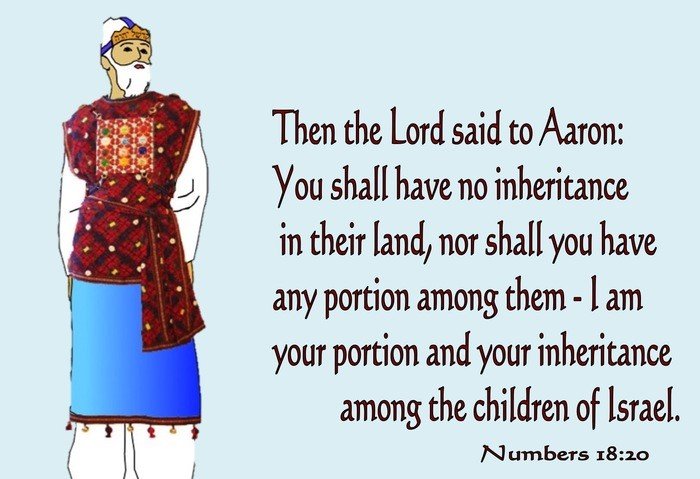
The tribe of Levi was uniquely separated for service in the Tabernacle and later the Temple. Unlike the other tribes, the Levites received no territorial inheritance in the Promised Land. God therefore provided for their support through the tithes brought by the people.
“Behold, I have given the children of Levi all the tenth in Israel for an inheritance, for their service which they serve.” (Numbers 18:21)
The tithe functioned within a broader covenantal system that included sacrifices, offerings, feast days, ceremonial observances, priestly duties, and Temple maintenance. It was not an isolated practice but part of an entire structure designed for Israel under the Law.
When discussing tithing, it is important to remember that the Old Covenant governed a nation. Israel's religious, social, and governmental structures were interconnected. The tithe contributed to the maintenance of that covenant system and the support of those who ministered within it.
Understanding this context prevents believers from extracting one element of the Mosaic system while ignoring the larger framework to which it belonged.
________________________________________
The Principle of Voluntary Giving Throughout the Old Testament
“Speak unto the children of Israel, that they bring me an offering: of every man that giveth it willingly with his heart ye shall take my offering.” (Exodus 25:2)
One of the greatest misconceptions concerning biblical giving is the assumption that voluntary giving began in the New Testament. A careful examination of Scripture reveals that God emphasized willing generosity long before the coming of Christ.
When God instructed Moses regarding the construction of the Tabernacle, He specifically required that offerings come from willing hearts.
“Take ye from among you an offering unto the LORD: whosoever is of a willing heart, let him bring it.” (Exodus 35:5)
The response of the people was extraordinary.
“And they came, every one whose heart stirred him up, and every one whom his spirit made willing.” (Exodus 35:21)
Men and women brought gold, silver, bronze, precious materials, and other resources necessary for God's work. Their giving flowed from gratitude and devotion rather than coercion.
The generosity became so abundant that Moses was forced to stop the collection.
“For the stuff they had was sufficient for all the work to make it, and too much.” (Exodus 36:7)
This remarkable event demonstrates the power of willing generosity. No manipulation was required. No threats were issued. The people gave because their hearts had been touched by God.
The same principle appears during David's preparations for the Temple.
“Then the people rejoiced, for that they offered willingly, because with perfect heart they offered willingly to the LORD.” (1 Chronicles 29:9)
David understood that all resources originate from God.
“For all things come of thee, and of thine own have we given thee.” (1 Chronicles 29:14)
These passages reveal an important truth. Even under the Old Covenant, God desired willing hearts. He delighted in generosity motivated by gratitude, worship, and love rather than reluctant compliance.
________________________________________
Jesus and Tithing Before the New Covenant
“Woe unto you, scribes and Pharisees, hypocrites! for ye pay tithe of mint and anise and cummin.” (Matthew 23:23)
One of the most frequently cited passages concerning tithing appears in Jesus' rebuke of the Pharisees. However, understanding the context is essential.
At the time Jesus spoke these words, the New Covenant had not yet been established. Jesus had not yet died on the cross. The Temple remained active. The Levitical priesthood continued functioning. The sacrifices prescribed by Moses were still being offered.
Jesus addressed Jewish religious leaders living under the Law of Moses. His criticism was not directed at their practice of tithing but at their hypocrisy. They carefully tithed herbs and spices while neglecting justice, mercy, and faithfulness.
“These ought ye to have done, and not to leave the other undone.” (Matthew 23:23)
Jesus affirmed their obligations under the covenant in which they lived. However, this passage does not directly establish a legal requirement for believers living under the New Covenant after His death and resurrection.
Proper biblical interpretation requires recognizing covenantal transitions within God's redemptive plan.
________________________________________
The Establishment of the New Covenant Through Christ
“This cup is the new testament in my blood, which is shed for you.” (Luke 22:20)
The death and resurrection of Jesus Christ mark the turning point of human history. Through His sacrifice, Jesus fulfilled the Law and established a New Covenant.
Jeremiah had prophesied:
“Behold, the days come, saith the LORD, that I will make a new covenant.” (Jeremiah 31:31)
The writer of Hebrews confirms this fulfillment.
“In that he saith, A new covenant, he hath made the first old.” (Hebrews 8:13)
Believers are now justified by faith in Christ rather than by observance of the Mosaic Law.
“Therefore being justified by faith, we have peace with God through our Lord Jesus Christ.” (Romans 5:1)
This covenantal change affects how believers approach stewardship, worship, and giving. The focus shifts from external legal requirements to inward transformation through the Holy Spirit.
________________________________________
The Apostolic Pattern of Christian Giving
A striking fact emerges when examining the writings of the apostles. Although they addressed many aspects of Christian living, they never issued a direct command requiring every believer to tithe ten percent.
Instead, they emphasized proportional, generous, and voluntary giving.
“Upon the first day of the week let every one of you lay by him in store, as God hath prospered him.” (1 Corinthians 16:2)
Notice the principle. Giving is connected to God's blessing and provision rather than a universally imposed percentage.
The apostles taught stewardship rooted in gratitude rather than obligation. Christians were encouraged to participate generously in the work of God while allowing the Holy Spirit to guide their decisions.
This does not diminish giving. Rather, it elevates giving from a legal requirement to an act of worship.
________________________________________
The Macedonian Example of Grace-Filled Generosity
“Moreover, brethren, we do you to wit of the grace of God bestowed on the churches of Macedonia.” (2 Corinthians 8:1)
The churches of Macedonia provide one of the greatest examples of Christian generosity found anywhere in Scripture.
Despite experiencing poverty and affliction, they gave with extraordinary liberality.
“For to their power, I bear record, yea, and beyond their power they were willing of themselves.” (2 Corinthians 8:3)
Their giving exceeded what might have been expected.
Paul did not praise them for fulfilling a legal obligation. He praised them because grace had transformed their hearts.
The Macedonians first surrendered themselves to the Lord.
“But first gave their own selves to the Lord.” (2 Corinthians 8:5)
This is the foundation of Christian stewardship. God desires surrendered hearts before He desires financial gifts.
When the heart belongs fully to God, generosity naturally follows.
________________________________________
Supporting the Work of the Gospel
“Even so hath the Lord ordained that they which preach the gospel should live of the gospel.” (1 Corinthians 9:14)
The absence of a New Testament command concerning mandatory tithing does not eliminate the responsibility to support ministry.
Scripture clearly teaches that those who devote themselves to preaching, teaching, and shepherding God's people deserve support.
Paul writes:
“Let the elders that rule well be counted worthy of double honour, especially they who labour in the word and doctrine.” (1 Timothy 5:17)
He further declares:
“The labourer is worthy of his reward.” (1 Timothy 5:18)
God's people are called to support churches, missionaries, evangelists, pastors, teachers, and ministries that faithfully proclaim the Gospel.
Christian generosity plays a vital role in advancing God's Kingdom throughout the world.
________________________________________
The Message of Hebrews and the Change of Priesthood
“For the priesthood being changed, there is made of necessity a change also of the law.” (Hebrews 7:12)
Hebrews chapter seven frequently appears in discussions concerning tithing because it references Abraham's encounter with Melchizedek.
However, the primary purpose of Hebrews 7 is not to establish mandatory tithing. Its central message concerns the superiority of Christ's priesthood.
The writer demonstrates that Jesus is a priest after the order of Melchizedek rather than after the order of Levi.
This change in priesthood signifies a change in covenant administration.
The Levitical system that received tithes has reached fulfillment in Christ. Believers now serve under a better covenant established through His sacrifice.
The focus shifts away from maintaining a Levitical structure and toward supporting the mission of Christ through voluntary stewardship.
________________________________________
Grace-Based Stewardship Under the New Covenant
“For if there be first a willing mind, it is accepted according to that a man hath.” (2 Corinthians 8:12)
The New Covenant introduces a broader understanding of stewardship. Instead of asking how much belongs to God, believers recognize that everything belongs to God.
“The earth is the LORD'S, and the fulness thereof.” (Psalm 24:1)
Every resource, possession, talent, opportunity, and blessing comes from Him.
Christians therefore serve as stewards rather than owners.
The question becomes not merely whether one gives ten percent but whether one faithfully manages one hundred percent for God's glory.
This perspective challenges believers to view all aspects of life through the lens of stewardship and accountability.
________________________________________
Cheerful Giving as the New Covenant Standard
“Every man according as he purposeth in his heart, so let him give.” (2 Corinthians 9:7)
Perhaps no passage summarizes New Testament giving more clearly than Paul's instruction to the Corinthians.
Giving should be intentional.
Giving should arise from personal conviction.
Giving should not be reluctant.
Giving should not be compelled.
Giving should be joyful.
Paul concludes:
“For God loveth a cheerful giver.” (2 Corinthians 9:7)
This principle reflects God's character. He is the ultimate giver.
“For God so loved the world, that he gave his only begotten Son.” (John 3:16)
Christian generosity becomes a reflection of God's own generous nature.
________________________________________
Summary
Scripture reveals that God has always valued willing hearts more than reluctant compliance. Tithing functioned within the covenant structure of ancient Israel under the Mosaic Law and served important purposes related to the Levitical priesthood and national worship. However, the New Testament does not contain a direct command requiring every believer to give a mandatory ten percent. Instead, the apostles consistently teach principles of cheerful giving, voluntary generosity, faithful stewardship, proportional giving according to blessing, support of Gospel ministry, and compassionate care for those in need.
The emphasis of the New Covenant is not legal obligation but grace-inspired generosity flowing from hearts transformed by the Holy Spirit.
________________________________________
Conclusion
The question is not whether Christians should give. Scripture clearly teaches that they should. The question is how Christians should give under the New Covenant established through Jesus Christ.
The New Testament calls believers beyond mere legal compliance into a life of stewardship, worship, generosity, and surrender. God desires hearts that willingly respond to His grace rather than individuals who give merely because they feel obligated.
As believers grow in their understanding of God's goodness, they discover that generosity becomes a privilege rather than a burden. Giving ceases to be an external requirement and becomes an expression of worship, gratitude, faith, and partnership in God's work.
________________________________________
Call to Action
Examine your heart before God concerning stewardship and generosity. Ask the Holy Spirit to reveal any areas of selfishness, fear, greed, or misunderstanding. Commit yourself to becoming a faithful steward of every blessing God has entrusted to you.
Support the work of the Gospel. Care for the poor and needy. Invest in Kingdom purposes. Give prayerfully, wisely, generously, and joyfully as the Lord leads you.
Allow your giving to become an act of worship that glorifies God and demonstrates your trust in His provision.
________________________________________
Final Word of Encouragement
God is not seeking your money as much as He is seeking your heart. The Lord who owns all things does not depend upon human resources, yet He graciously invites His people to participate in His work through faithful stewardship.
As you walk with Christ, allow generosity to become part of your spiritual character. Give because you love Him. Give because He first loved you. Give because His grace has transformed your life. Give because eternal rewards far exceed earthly possessions.
May your stewardship reflect the goodness of God, your generosity reveal the love of Christ, and your life demonstrate the faithfulness of a servant who honors the Lord in all things.
________________________________________
Salvation Prayer
Heavenly Father,
I come before You in the Name of Jesus Christ. I acknowledge that I am a sinner and that I need Your forgiveness. I believe that Jesus Christ is the Son of God, that He died on the cross for my sins, was buried, and rose again from the dead so that I might receive eternal life.
Today I repent of my sins and surrender my life completely to You. Lord Jesus, come into my heart and become my Savior and Lord. Wash me with Your precious blood and make me a new creation.
Fill me with Your Holy Spirit and teach me to walk in Your truth. Help me to love You, obey You, trust You, and faithfully steward every blessing You place in my hands. Give me a generous heart, a willing spirit, and a desire to honor You in every area of my life.
Thank You for forgiving me, saving me, and making me Your child. I receive Your gift of eternal life and commit myself to follow You all the days of my life.
In Jesus' Name I pray.
Amen.
















Leave a Comment