

KEY SCRIPTURE
“And after these things I saw another angel come down from heaven, having great power; and the earth was lightened with his glory. And he cried mightily with a strong voice, saying, Babylon the great is fallen, is fallen, and is become the habitation of devils, and the hold of every foul spirit, and a cage of every unclean and hateful bird. For all nations have drunk of the wine of the wrath of her fornication, and the kings of the earth have committed fornication with her, and the merchants of the earth are waxed rich through the abundance of her delicacies. And I heard another voice from heaven, saying, Come out of her, my people, that ye be not partakers of her sins, and that ye receive not of her plagues. For her sins have reached unto heaven, and God hath remembered her iniquities.” Revelation 18:1–5
________________________________________
INTRODUCTION: WHEN RELIGION REPLACES TRUE WORSHIP
The greatest danger facing humanity is not merely the presence of open wickedness in the world, but the possibility of becoming religious while remaining far from the living God. A person may attend church, participate in religious activities, speak the name of Jesus, and appear spiritually accomplished while refusing the repentance, humility, holiness, and obedience that God requires. Religious appearances cannot substitute for a transformed heart. Where outward performance replaces inward surrender, faith becomes a mask, and the very place people expect to find spiritual refuge may become a place of deception.
The biblical image of the prostitute church describes spiritual unfaithfulness: a departure from wholehearted devotion to God in pursuit of worldly approval, selfish ambition, power, wealth, and corrupt desires. In Revelation, Babylon represents a rebellious system that seduces nations, corrupts those who exercise influence, and prospers through pride and exploitation. The warning is not a licence to condemn every congregation or accuse particular believers without evidence. Rather, it calls every church, leader, and individual to examine whether their loyalty belongs to Christ or to competing interests.
God is not impressed by buildings, crowds, grand performances, or celebrated religious personalities when truth and righteousness are neglected. He seeks people who worship Him sincerely, obey His Word, and bear the fruit of repentance. The central message of this lesson is therefore a call to spiritual revolution through repentance. This revolution does not begin with outward rebellion, public accusations, or the destruction of institutions. It begins when the heart bows before God, acknowledges sin, rejects deception, and returns to the way of Christ.
The Lord's invitation is urgent because spiritual deception can become deeply rooted when people repeatedly reject correction. Yet His call to repentance is also an expression of mercy. He warns because He desires people to turn from destruction and receive life. Whoever hears His voice must not harden their heart, but respond with humility and a willingness to change.

________________________________________
THE FALL OF SPIRITUAL BABYLON
“Babylon the great is fallen, is fallen.” Revelation 18:2
Babylon represents a system that sets itself against God's truth while presenting its influence, prosperity, and power as evidence of success. It attracts people through promises of greatness, worldly recognition, and personal advancement, but its foundations are corrupted by pride and rebellion. Its outward splendour conceals inward decay. What appears impressive before humanity may stand condemned before God when it is built upon deception and unfaithfulness.
The prostitute imagery in Revelation describes spiritual infidelity, not merely sexual immorality. God's people are called to belong to Him wholeheartedly, yet spiritual Babylon draws their affection toward idols, worldly values, dishonest gain, and the pursuit of human glory. Whenever religious institutions place money above integrity, reputation above truth, or the ambitions of leaders above the welfare of God's people, they must examine themselves seriously.
The warning is particularly important where religious language is used to protect wrongdoing. Calling an institution Christian does not automatically make its conduct righteous. Neither the size of its congregation nor the splendour of its buildings proves that God approves of everything done within it. The decisive question is whether its teaching and conduct agree with Scripture and reflect the character of Jesus Christ.
God's judgment exposes what human admiration conceals. Therefore, believers must not measure spiritual health by appearances alone. They must examine the fruit, the doctrine, the character of leadership, and the place given to repentance and obedience.
________________________________________
GOD IS CALLING HIS PEOPLE TO COME OUT
“Come out of her, my people, that ye be not partakers of her sins, and that ye receive not of her plagues.” Revelation 18:4
God's call to come out of Babylon is a call to separate from sin, deception, corruption, and every influence that draws the heart away from Him. It is not simply a command to leave a physical building or abandon every religious community. Its deeper meaning is that God's people must refuse participation in practices that contradict His truth, even when those practices are accepted, celebrated, or defended by influential religious leaders.
A believer cannot remain faithful to Christ while deliberately embracing what Christ condemns. Where falsehood is promoted, truth must be upheld. Where greed is celebrated, integrity must remain. Where sin is excused, repentance must be preached. Where vulnerable people are exploited, their protection and dignity must be defended. Separation from evil requires conviction expressed through practical obedience.
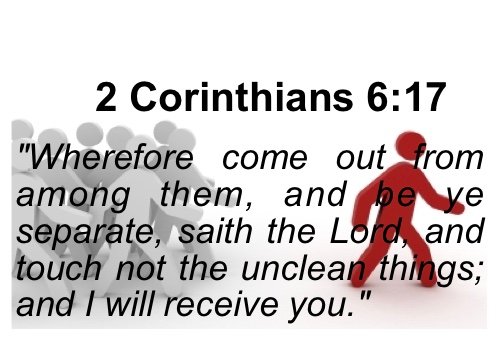
Paul writes, “Wherefore come out from among them, and be ye separate, saith the Lord, and touch not the unclean thing; and I will receive you.” 2 Corinthians 6:17
This separation is not an invitation to pride, hatred, or self-righteousness. Those who recognise corruption must guard against becoming corrupt themselves through bitterness, arrogance, or careless accusations. The purpose of separation is faithfulness to God, not the creation of a new class of people who consider themselves superior to everyone else.
The true test is whether a person is becoming more obedient, truthful, compassionate, and holy. God's people must leave behind whatever contradicts His Word and remain firmly attached to Jesus Christ, who alone is the foundation of genuine spiritual life.
________________________________________
REPENTANCE MUST PRODUCE REAL TRANSFORMATION
“Except ye repent, ye shall all likewise perish.” Luke 13:3
Repentance is the central demand of this message. God does not call people merely to feel emotional, express regret, attend special meetings, or make public declarations. True repentance involves a change of heart that produces a change of direction. It means acknowledging sin before God, abandoning excuses, accepting His correction, and choosing to walk in obedience.
There is a difference between appearing repentant and actually turning away from sin. A person may weep publicly yet continue practising dishonesty, pride, exploitation, immorality, or hatred in private. Another may speak eloquently about holiness while resisting every correction that challenges personal interests. Such outward displays cannot replace a surrendered heart. Genuine repentance is demonstrated over time through changed attitudes, decisions, relationships, and conduct.
John the Baptist declared, “Bring forth therefore fruits meet for repentance.” Matthew 3:8
The fruit of repentance does not mean that a person becomes instantly perfect or never experiences temptation. It means that sin is no longer treated as a friend, a right, or an acceptable way of life. The repentant person seeks forgiveness, makes amends where possible, welcomes correction, and depends upon God's grace to grow in righteousness.
This call applies to every person, including pastors, evangelists, prophets, church administrators, and ordinary members. No position exempts anyone from accountability before God. Repentance must begin personally before it can bring meaningful renewal to a family, congregation, or wider community.
________________________________________
THE DANGER OF RELIGIOUS PERFORMANCE
“Having a form of godliness, but denying the power thereof: from such turn away.” 2 Timothy 3:5
Religious performance becomes dangerous when appearance matters more than obedience. Meetings may be elaborate, music impressive, preaching entertaining, and buildings magnificent, yet these things cannot compensate for the absence of truth, holiness, and love. Spiritual activity is valuable when it directs people toward God; it becomes misleading when it is used to attract admiration, conceal wrongdoing, or build the reputation of human personalities.
The church is not called to compete with the world in entertainment, celebrity culture, or displays of wealth. Its calling is to proclaim the Gospel, make disciples, care for the vulnerable, uphold righteousness, and lead people into a living relationship with Jesus Christ. Excellence in ministry is not wrong, and beautiful buildings are not inherently sinful. The problem arises when these things become substitutes for spiritual integrity.
Jesus warned against worship that honours God with words while keeping the heart far from Him. “This people draweth nigh unto me with their mouth, and honoureth me with their lips; but their heart is far from me.” Matthew 15:8
This warning demands honest self-examination. Are people being taught to obey Christ, or merely to admire religious personalities? Are financial contributions handled with transparency, or used to enrich leaders without accountability? Are the wounded receiving compassionate care, or being silenced to protect an institution's reputation? Does preaching confront sin with truth and mercy, or avoid every difficult subject to preserve popularity?
Where performance replaces faithfulness, spiritual renewal must begin with repentance and a return to the authority of God's Word.

________________________________________
FALSE TEACHING AND THE DECEPTION OF SOULS
“For such are false apostles, deceitful workers, transforming themselves into the apostles of Christ.” 2 Corinthians 11:13
False teaching is dangerous because it can use familiar religious language while leading people away from the truth. Deception does not always appear openly hostile to God. Sometimes it presents itself as freedom without responsibility, blessing without obedience, authority without accountability, or grace without repentance. Such messages appeal to human desires while weakening the call to holiness.
Believers must therefore test teachings rather than accepting them merely because they are delivered confidently or accompanied by impressive claims. Scripture instructs God's people to examine what they hear and hold firmly to what is good. “Prove all things; hold fast that which is good.” 1 Thessalonians 5:21
A teacher's conduct matters, but discernment must not become careless judgment. An unusual style, a large congregation, a small congregation, financial prosperity, or personal disagreement does not by itself prove that someone is false. Teachings and conduct must be evaluated fairly against Scripture, with attention to truth, character, accountability, and the fruit produced in people's lives.
Those who lead others carry a serious responsibility. They must not manipulate people through fear, manufacture spiritual claims to gain money, or use the authority of God's name to silence legitimate questions. Leaders are called to serve the flock, not consume it for personal advantage.
Peter warned shepherds against dominating those entrusted to their care and called them to become examples to the flock. 1 Peter 5:2–3. Genuine spiritual leadership protects, teaches, corrects, and serves. It does not deliberately enslave people through deception.
________________________________________
THE LORD REJECTS PRIDE AND RECEIVES THE HUMBLE
“God resisteth the proud, but giveth grace unto the humble.” James 4:6
Pride is one of the greatest barriers to repentance because it persuades people that they have nothing to correct. A proud person may demand respect while refusing accountability, desire authority while avoiding service, and condemn the failures of others while excusing personal wrongdoing. Such a heart becomes resistant to God's instruction.
The spirit of Christ is different. Jesus possessed authority, yet He served. He did not use His position to exploit the weak or demand worldly honour. He gave Himself for the salvation of others and taught His disciples that greatness in God's kingdom is inseparable from service.
Jesus said, “For even the Son of man came not to be ministered unto, but to minister, and to give his life a ransom for many.” Mark 10:45
This example challenges every form of religious self-exaltation. Leadership is not a licence to dominate, and ministry is not a means of building a personal kingdom. Those entrusted with responsibility must remain teachable, honest, and willing to receive correction.
Humility does not mean denying one's gifts or refusing legitimate responsibility. It means recognising that every gift comes from God and must be used according to His purposes. The humble person is willing to learn, repent, serve, and submit personal ambitions to the will of the Lord.
If the church is to experience genuine renewal, pride must give way to humility, selfish ambition to service, and defensiveness to honest repentance.
________________________________________
SPIRITUAL UNFAITHFULNESS AND THE IDOLS OF THE HEART
“Thou shalt have no other gods before me.” Exodus 20:3
God calls His people to wholehearted devotion. Spiritual unfaithfulness occurs when anything is allowed to take the place that belongs to Him. Idolatry may involve the worship of physical images, but it may also appear in the form of money, influence, status, political power, personal ambition, or unquestioning loyalty to a religious personality.
Jeremiah used the language of unfaithfulness to describe God's people turning away from Him despite His repeated calls to return. In Jeremiah 3:1–2, the prophet confronts the spiritual infidelity of a people who have abandoned covenant faithfulness. The passage reveals the seriousness of divided loyalty, but it also belongs to a wider biblical call for God's people to return to Him.
A church may claim to honour Jesus while allowing its decisions to be controlled by the pursuit of wealth, the fear of powerful individuals, or the desire to appear successful. When these interests determine what may be preached, which sins may be confronted, or whose wrongdoing may be exposed, the heart has begun to serve another master.
Jesus taught, “Ye cannot serve God and mammon.” Matthew 6:24
The answer is not merely to condemn other people for idolatry. Each believer must ask what controls their own heart. Have ambition, possessions, recognition, fear, or loyalty to human leaders become more important than obedience to God? True repentance requires identifying these rival loyalties and placing them under the lordship of Jesus Christ.
God does not call His people to divided allegiance. He calls them to worship Him in spirit and in truth, with lives that demonstrate the sincerity of their devotion.
________________________________________
THE CALL TO CONFRONT DARKNESS WITH TRUTH
“And have no fellowship with the unfruitful works of darkness, but rather reprove them.” Ephesians 5:11
The church must not make peace with sin simply because confronting it is uncomfortable. When wrongdoing is ignored, vulnerable people may suffer, false teaching may spread, and destructive practices may become normal. Silence can protect the powerful at the expense of those who need truth and justice.
Nevertheless, confronting darkness must be done in a manner consistent with Christ. Spiritual warfare is not a justification for threats, harassment, violence, or unsupported allegations that particular individuals are possessed by demons. Scripture calls believers to resist evil, reject falsehood, pray faithfully, and stand firm in truth. It also calls them to exercise discernment, self-control, and love.
Paul writes, “For we wrestle not against flesh and blood, but against principalities, against powers, against the rulers of the darkness of this world.” Ephesians 6:12
The believer's response is to put on the whole armour of God, remain grounded in Scripture, pray, live righteously, and refuse participation in evil. Spiritual conflict must not become an excuse to mistreat people. Our struggle is against the powers and works of darkness, while those who are deceived must be approached with truth, wisdom, and a desire for their restoration wherever they are willing to repent.
Church leaders must also establish accountable practices that protect people from abuse and exploitation. Truth should be preached openly, finances managed honestly, misconduct addressed responsibly, and legitimate concerns investigated fairly. A congregation cannot credibly claim to defend righteousness while concealing wrongdoing to protect its reputation.
The victory of truth is demonstrated not by loud accusations but by faithful obedience, courageous correction, justice, and the transforming power of God.
________________________________________
THE WAY THAT SEEMS RIGHT MAY LEAD TO DESTRUCTION
“There is a way which seemeth right unto a man, but the end thereof are the ways of death.” Proverbs 14:12
Human beings can become so convinced of their own wisdom that they mistake personal preference for God's direction. Religious traditions, popular teachings, and the approval of influential people may create a sense of security, yet none can replace obedience to God's truth. A path does not become righteous merely because many people walk upon it.
This is why believers must remain willing to examine their beliefs and conduct in the light of Scripture. Familiarity is not proof of truth, popularity is not proof of divine approval, and sincerity alone does not guarantee that a person is correct. Sincere people can be mistaken, and spiritual maturity requires the humility to learn and change.
Jesus declared that the way to life is narrow and that few find it. Matthew 7:13–14. His words warn against assuming that the easiest or most popular path is necessarily the right one. Following Him may require rejecting dishonest advantages, leaving destructive relationships, admitting wrongdoing, or standing for truth when doing so costs recognition and comfort.
Yet the narrow way is not a call to despair. It is an invitation to trust Christ and walk in His teaching. God gives grace to those who seek Him sincerely, and His Word provides direction for those willing to obey.
________________________________________
GOD'S MERCY STILL INVITES THE CHURCH TO RETURN
“Return, thou backsliding Israel, saith the LORD; and I will not cause mine anger to fall upon you: for I am merciful, saith the LORD.” Jeremiah 3:12
Although the message of spiritual unfaithfulness is serious, it must not be separated from God's mercy. The Lord exposes sin because He calls people to turn away from it. His warnings are not invitations to despair, but opportunities to respond before the consequences of rebellion become worse.
The church must therefore hear the call to repentance as a message directed to its own heart. Congregations should examine their teaching, leadership, treatment of people, financial practices, and commitment to holiness. Pastors must be willing to repent when they have abused their authority. Members must be willing to abandon sin rather than hide behind religious identity. Those who have been harmed should be treated with dignity, protected from further abuse, and given appropriate support.
Restoration requires more than a public apology or a temporary display of sorrow. Where damage has been done, there must be honest acknowledgement, appropriate accountability, and practical efforts to repair the harm. Where false teaching has been promoted, truth must be restored. Where exploitation has occurred, those responsible must not be shielded from legitimate consequences.
God's mercy does not mean that sin is unimportant. Rather, His mercy opens the way for forgiveness and transformation. The invitation remains: return to the Lord with a sincere heart and let His truth reshape your life.
________________________________________
SUMMARY: A CHURCH MUST CHOOSE TRUTH OVER APPEARANCE
The warning concerning the prostitute church is a warning against spiritual infidelity, religious hypocrisy, pride, deception, exploitation, and the pursuit of worldly glory at the expense of obedience to God. Revelation's message about Babylon calls God's people to refuse participation in sin and to remain faithful to Him.
True repentance must go beyond outward performance. It must produce a change of heart, conduct, priorities, and direction. Leaders must serve rather than exploit, believers must test teachings against Scripture, and congregations must uphold truth, holiness, integrity, and compassion. Spiritual warfare must be expressed through prayer, righteousness, discernment, and resistance to evil, never through careless accusations or mistreatment of people.
Above all, God continues to call people to Himself. No religious title, building, reputation, or public display can replace a genuine relationship with Jesus Christ. The right response is to humble ourselves, repent sincerely, reject every rival allegiance, and walk in the truth of God's Word.

________________________________________
CONCLUSION: RETURN TO JESUS CHRIST
The greatest need of the church is not another performance, a more impressive building, or a greater public reputation. Its greatest need is a return to Jesus Christ in sincerity, obedience, and holiness. Whenever religious life becomes separated from the truth of the Gospel, renewal must begin with repentance.
Jesus gave His life to redeem sinners and reconcile them to God. He calls people away from darkness and into His marvellous light. His grace is not permission to continue in sin; it is the power and invitation to receive forgiveness and walk in newness of life.
Let every believer examine their heart without hypocrisy. Let every leader remember that authority is a responsibility before God. Let every congregation choose truth over appearances and faithful service over selfish ambition. The Lord is merciful to those who turn to Him, but His call must not be treated carelessly.
The final question is not whether people recognise us as religious. It is whether our lives demonstrate that we belong to Jesus Christ.
________________________________________
THE CALL TO ACTION: ANSWER THE CALL TO REPENTANCE
Today, make a sincere examination of your life before God. Identify the sins, attitudes, relationships, and ambitions that have drawn you away from His truth. Confess your wrongdoing honestly, turn away from it, and ask the Lord to renew your heart. Do not depend on religious appearances or the approval of other people. Seek the approval that comes from a life surrendered to Christ.
If you are a church leader, examine how you use your authority and whether the people entrusted to your care are being served faithfully. If your congregation has tolerated wrongdoing, take responsible steps toward correction, accountability, and restoration. If you have been deceived by false teaching, return to Scripture and seek wise, trustworthy spiritual guidance.
Refuse to participate in corruption simply because it is popular. Do not spread accusations without evidence, but do not conceal genuine wrongdoing to protect reputations. Stand for truth with courage, humility, and love. Above all, remain faithful to Jesus Christ, who alone is the way, the truth, and the life.
________________________________________
FINAL WORD OF ENCOURAGEMENT
Do not allow the corruption of others to destroy your faith in God. Even when religious institutions fail, Jesus Christ remains faithful. Your calling is to follow Him, obey His Word, pursue holiness, and remain steadfast in truth.
The Lord's call to repentance is also a call to hope. Wherever a person sincerely turns from sin and seeks God, the door to forgiveness and transformation is open through Jesus Christ. Do not harden your heart against correction, and do not mistake religious activity for spiritual life. Walk humbly with God, remain faithful in the small things, and let the fruit of your life bear witness to the One you serve.
Choose Christ over deception, truth over appearance, humility over pride, and repentance over rebellion. Let your life become a testimony of genuine devotion to the living God.
________________________________________
SALVATION PRAYER
Heavenly Father, I come before You in the name of Jesus Christ. I acknowledge that I have sinned and that I need Your mercy, forgiveness, and transforming grace. I repent of my sins, my pride, my disobedience, and every way I have departed from Your truth. Please forgive me and cleanse my heart.
Lord Jesus, I believe that You died for my sins and rose again. I invite You to be the Lord and Saviour of my life. Deliver me from deception, renew my mind through Your Word, and teach me to walk in righteousness, humility, holiness, and love. Give me the courage to reject evil and the wisdom to recognise what is true.
Holy Spirit, guide me into truth and strengthen me to live faithfully before God. Help me to bear the fruit of genuine repentance and to follow Jesus Christ all the days of my life. Let my heart belong wholly to You, and let my life bring honour to Your holy name.
Thank You, Father, for Your mercy and for the salvation offered through Jesus Christ. I surrender my life to You and ask You to lead me in Your way.
In the name of Jesus Christ, I pray. Amen.

























Leave a Comment